
líy’es (CANOE) PROJECT
-
CANOES CONNECT US
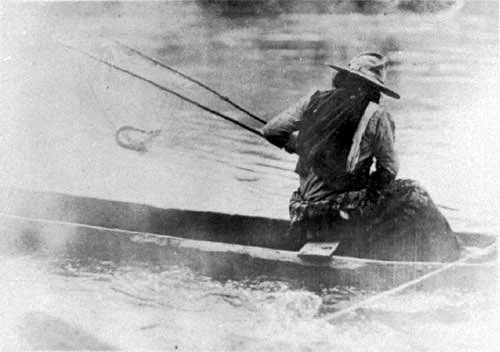
líy’es (canoes) are our relatives and vessels of memory and responsibility - carrying our relationships with Mother Earth, rivers and all First Foods forward into the present. We belong to the land and waters - bound together in kinship and ongoing reciprocal responsibilities. Traditional canoes made daily life on those rivers possible. Daily life traditionally organized around caring for those relations across our vast homelands and ancestral watersheds, moving with the waters and seasons to fish, hunt, gather & tend lands. Canoes carried our people to visit and trade with relatives along the rivers & coast and held great spiritual and cultural significance.
-
BRINGING THEM HOME
Colonization suppressed Nimiipuu canoe traditions through land grabs and attacking the rivers, the canoes themselves and the cultural space needed to keep that knowledge alive. Treaties and later land‑grabs pushed our People off much of our homeland, shrinking access to usual and accustomed fishing and travel routes where canoes were used. Dams, fishwheels and canneries on the Columbia and Snake systems devastated salmon and other fish runs, flooded villages and fishing sites and undercut our river‑based economy and lifeways to which canoes were essential. Missionaries, boarding schools and federal agents targeted, discouraged or forbid Indigenous practices, including traditional river travel, spiritual practices and material culture, so canoe knowledge, songs, protocols & carving methods were not readily passed on to younger generations. Reviving canoe carving & culture today helps us in undoing that suppression, strengthening our lifeways & renewing our responsibilities to our homelands, water, salmon and First Foods – it’s a living expression of Nimiipuu identity and responsibility to all our relations.
-
CANOES ON THE WATER
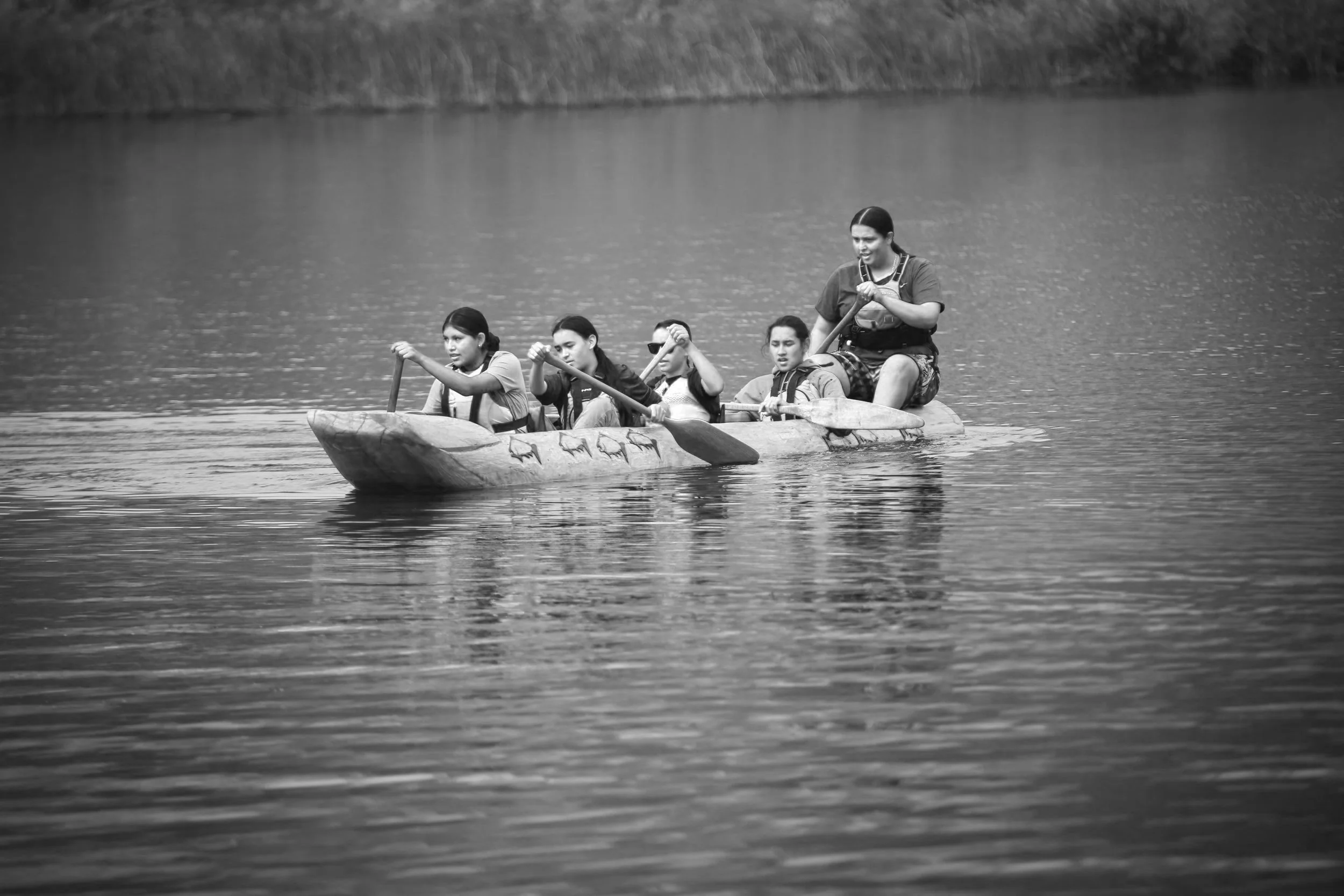
Canoes return to rivers following the foods and waters that have carried our people for generations - not as symbols but as ways to move, to remember, to connect. That means being on the water, supporting canoe and river work, strengthening access to wild salmon & other traditional foods and creating space for elders to teach and youth to lead.
CANOES CARRY US
LIVING WITH OUR RIVERS
The Nimíipuu Canoe Project was the brainchild of a number of Nez Perce Tribal members and canoe carvers after much discussion on why we discontinued carving our own canoes. Losing the canoe was a big cultural loss. Bringing it back was vital to our identity and ways, and taking part was a meaningful experience for everyone.
The idea came about after many Nimíipuu had paddled with Tribal members from the Kalispel, Colville, Coeur d’ Alene and Spokane Tribes at the 2016 Free the Snake Flotilla, an annual event which pushes for the removal of the four Lower Snake Dams. After paddling with our fellow tribal members, we became inspired and determined to carve our own traditional Nimiipuu canoe.
A HEALING JOURNEY - THE NIMIIPUU CANOE PROJECT
After the Tribal Council approved the land, the first step in the Nimíipuu Canoe Project was to find a suitable tree for the canoe, preferably cedar. We had two tree candidates that were located in the Selway-Lochsa Wilderness area and after a meeting with our Nez Perce Tribal Executive Committee they submitted a Special Use Permit to acquire the logs as they were located in the Wilderness area. We transported a Yellow Fir log to what became known as the “Nimiipuu Canoe Site” next to our Tribal clinic in Lapwai, Idaho; began gathering tools and in July 2017 started carving the first dugout canoe on the Nez Perce Reservation in 110 years. Everyone was welcome to help; many visitors from across the US and Canada came to support and see the project.
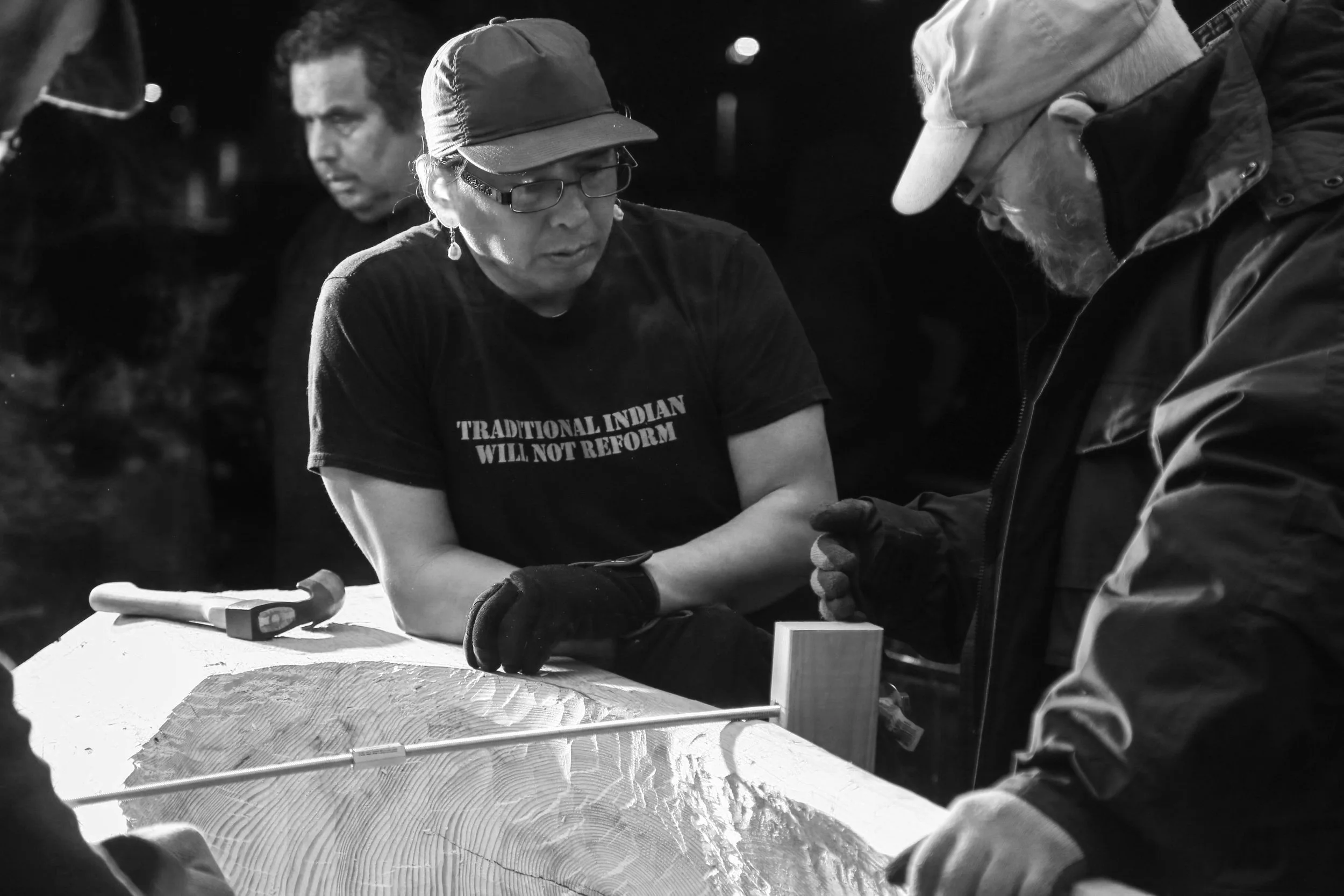
A group of people, including a woman with glasses and a cap, are gathered around a table working on a woodworking project. The woman is wearing a shirt that says 'TRADITIONAL INDIAN WILL NOT REFORM' and is focused on her task.
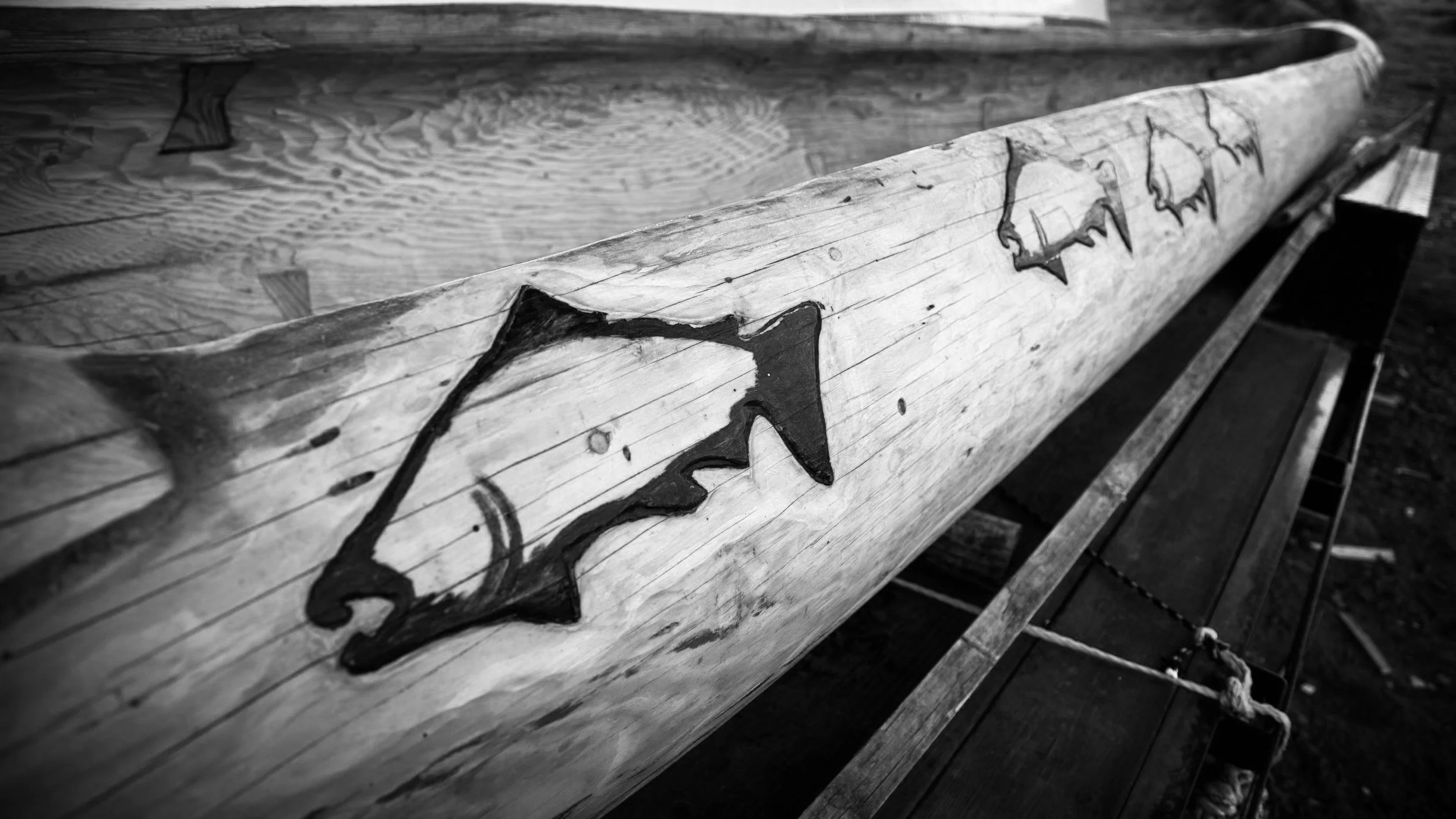
A black and white photo of a wooden bench with graffiti on it, situated outdoors.
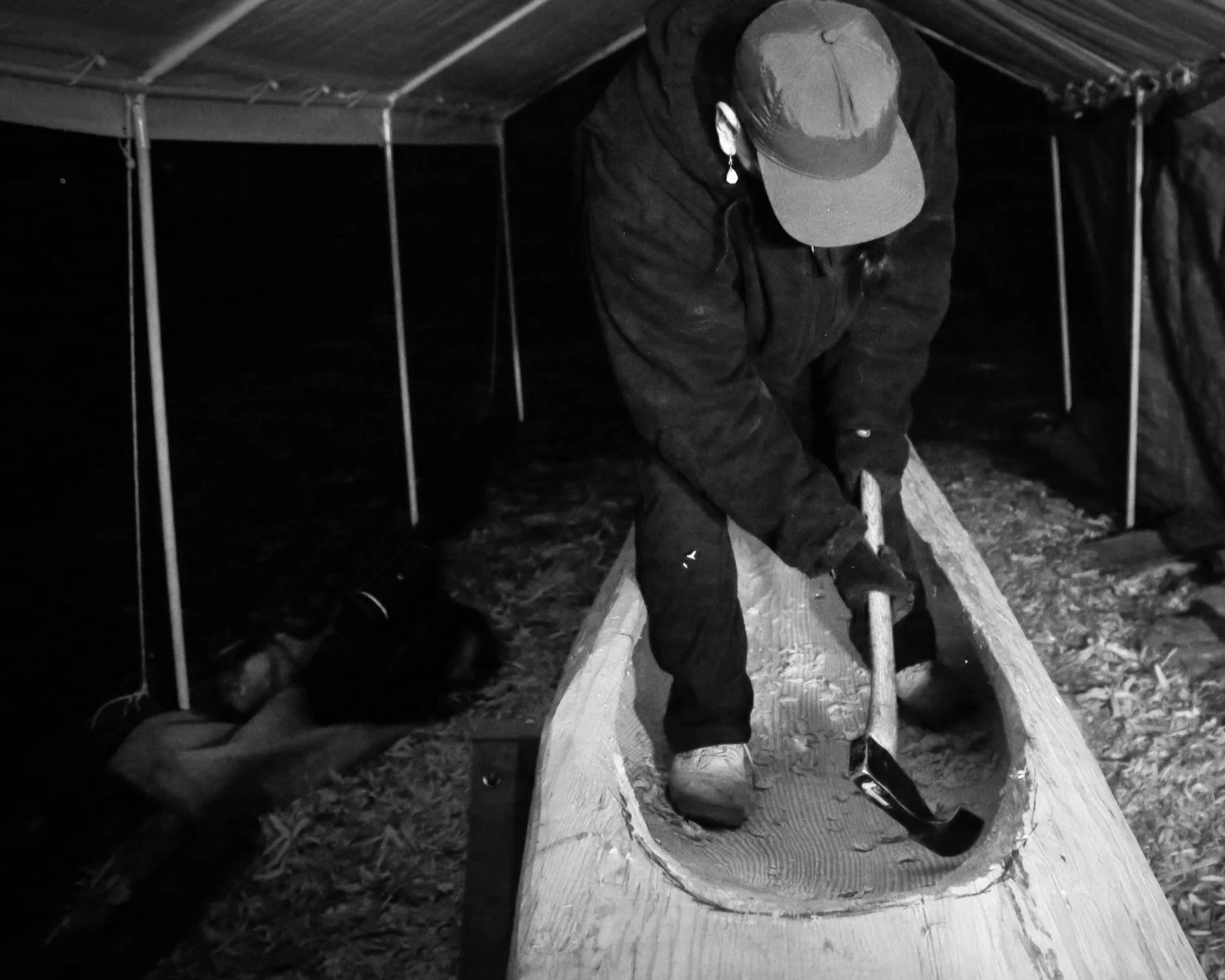
A person wearing a hat and earrings is working on a wooden project outdoors at night, under a canopy. They are bending over a large piece of wood on a wooden sawhorse, using a hand tool, possibly a saw.
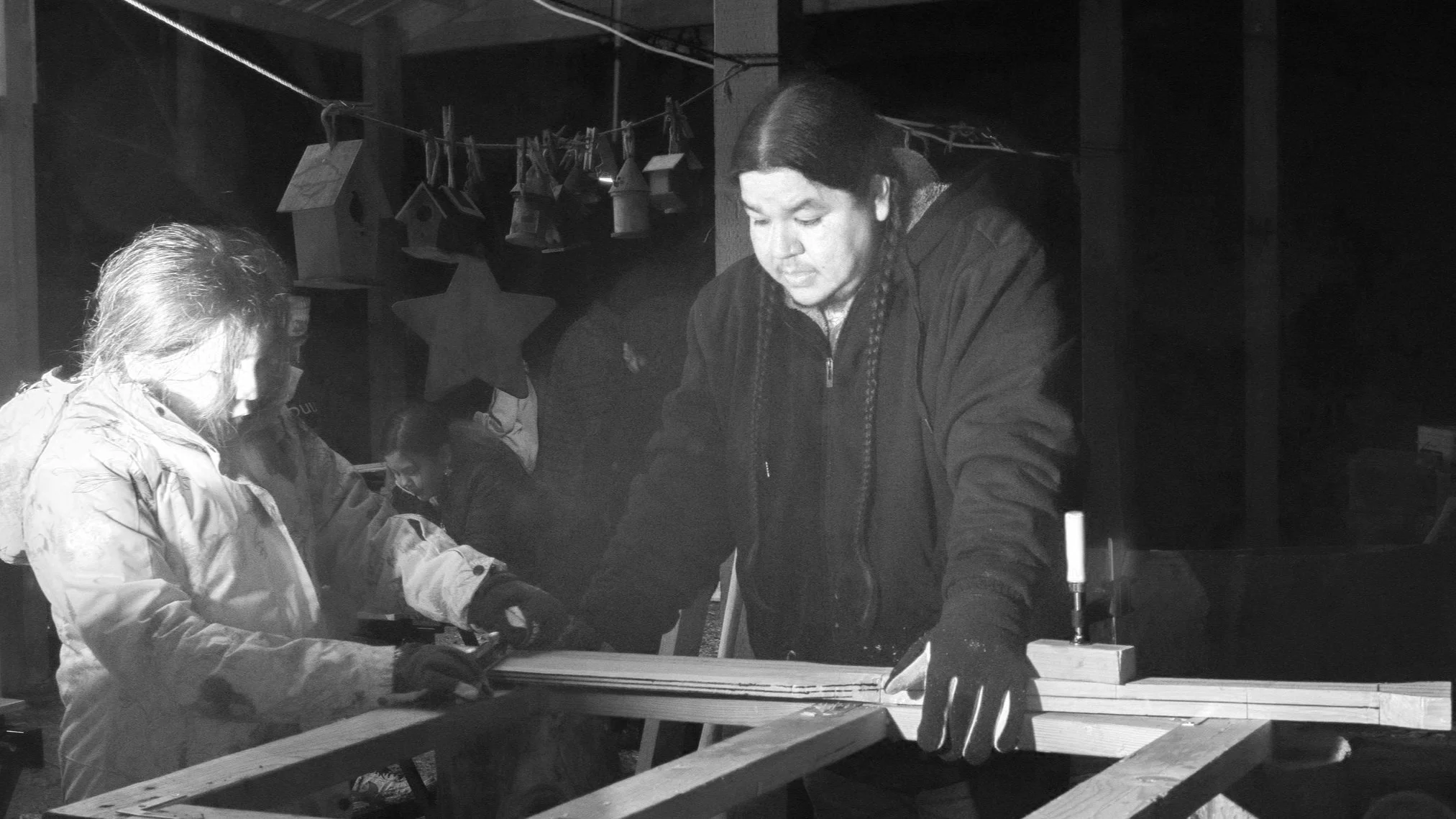
A group of people working together at a table, with birdhouses hanging in the background.
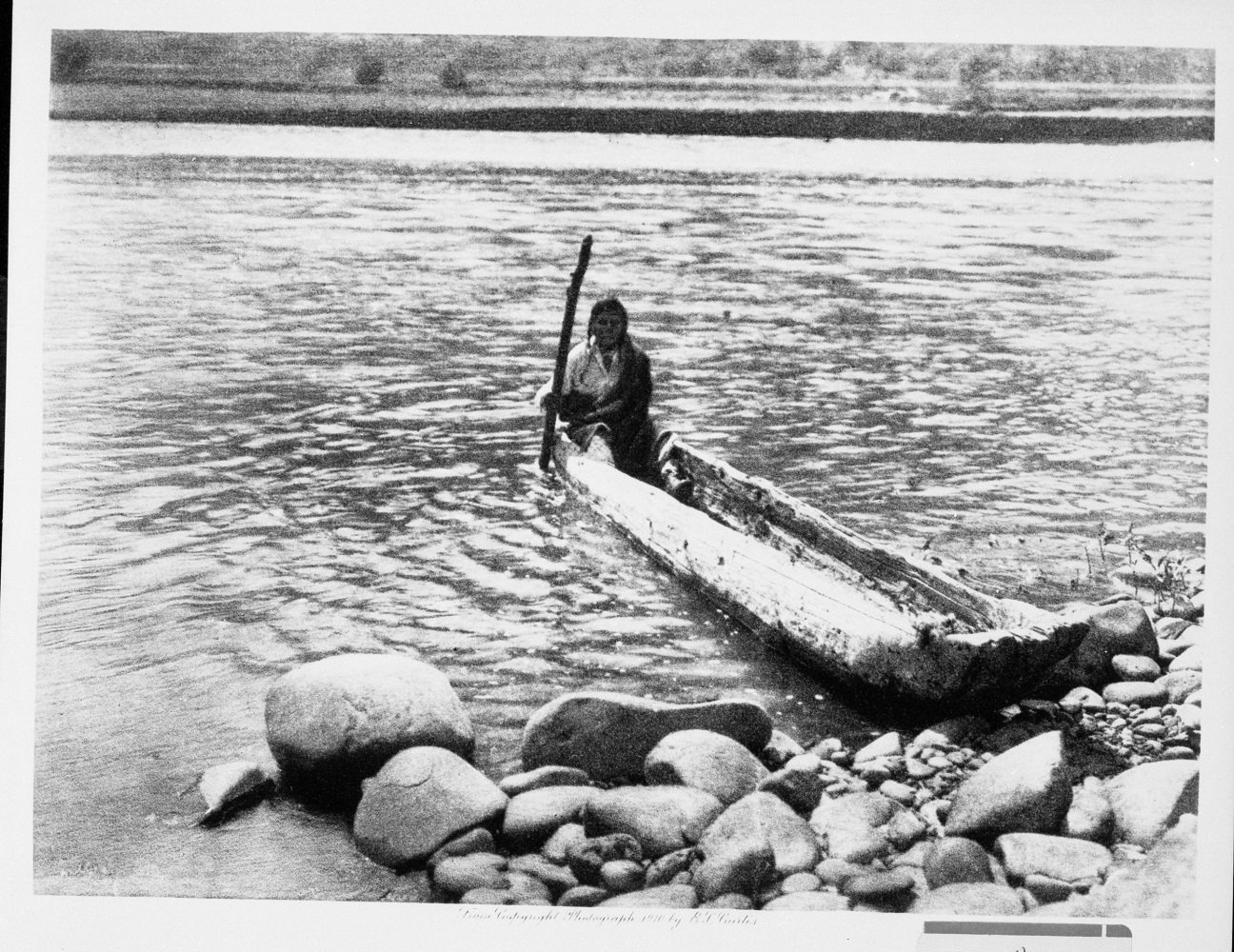
A long time ago, there was a sacred promise made to the salmon people. And that is that we would take care of them as long as they took care of us. And they have never broke their promise.
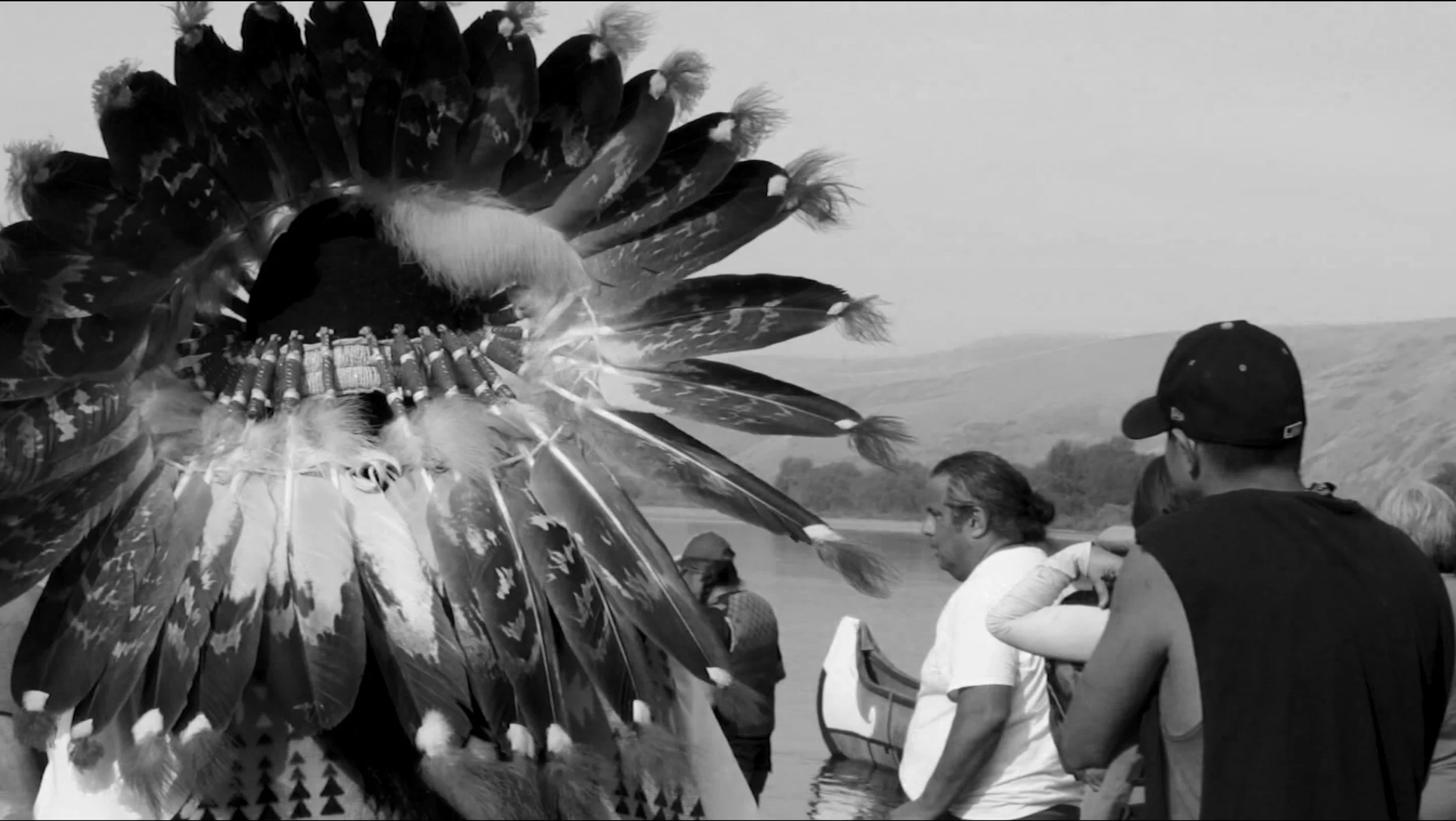
Creator made this world for us to take care of, not for corporations to exploit. It’s a part of us.
WE ARE SALMON PEOPLE
What happens to the salmon, happens to us.
EVERYTHING IS CONNECTED
Our duty as indigenous people is to speak for the salmon on their behalf.
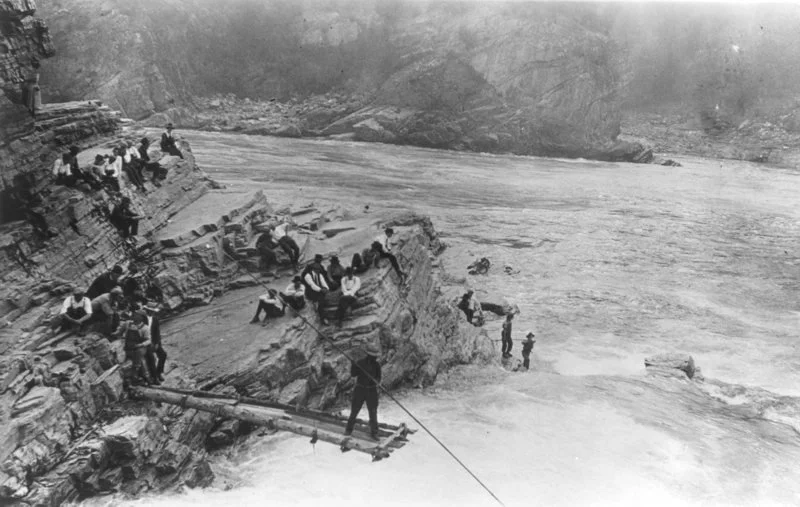
Whether it’s over-trapping beaver, decimating buffalo, overfishing or the dams…when you take away one part, you can't have the whole.
OUR FUTURE IS INDIGENOUS
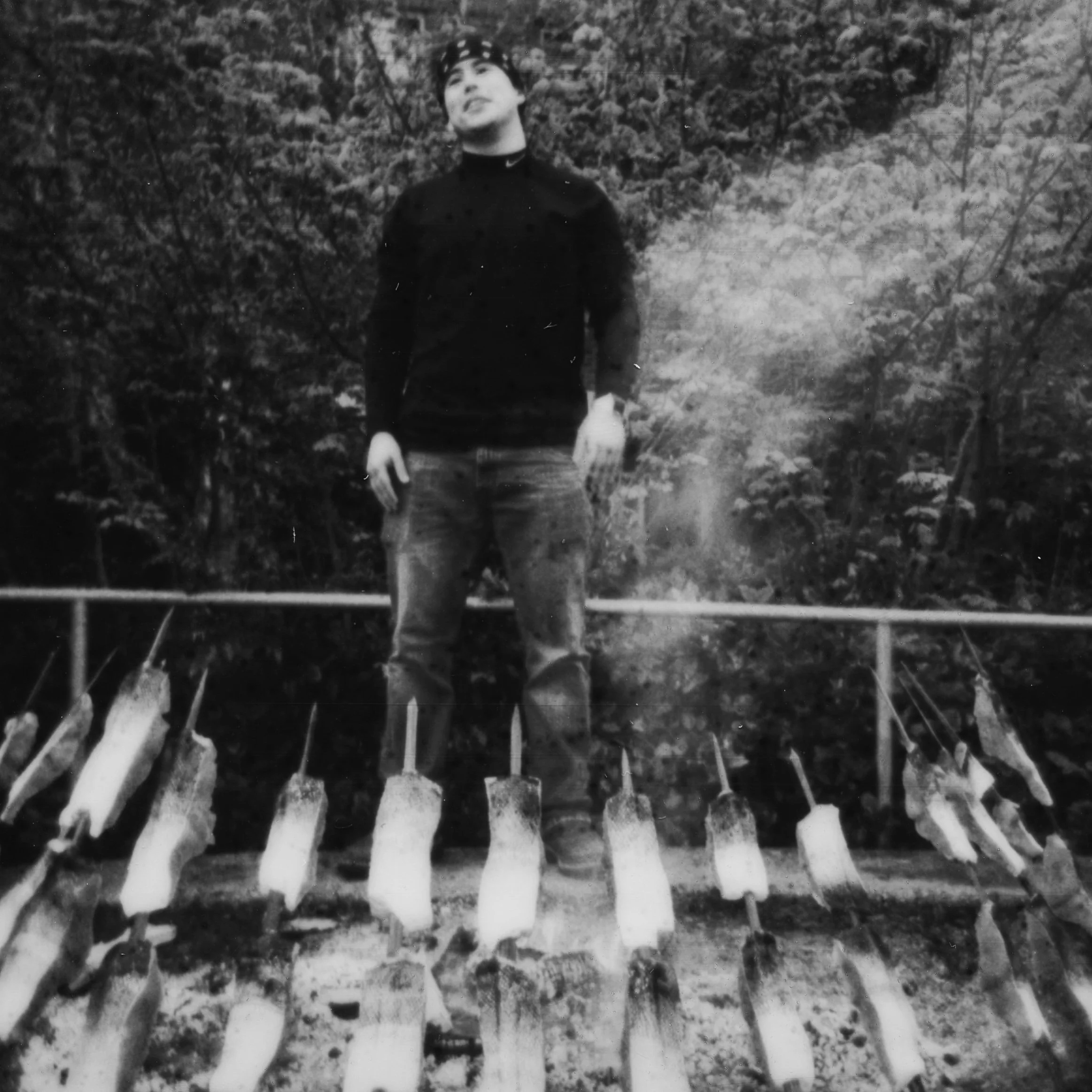
We need clean, running, cold water to survive. Just like the salmon and steelhead.
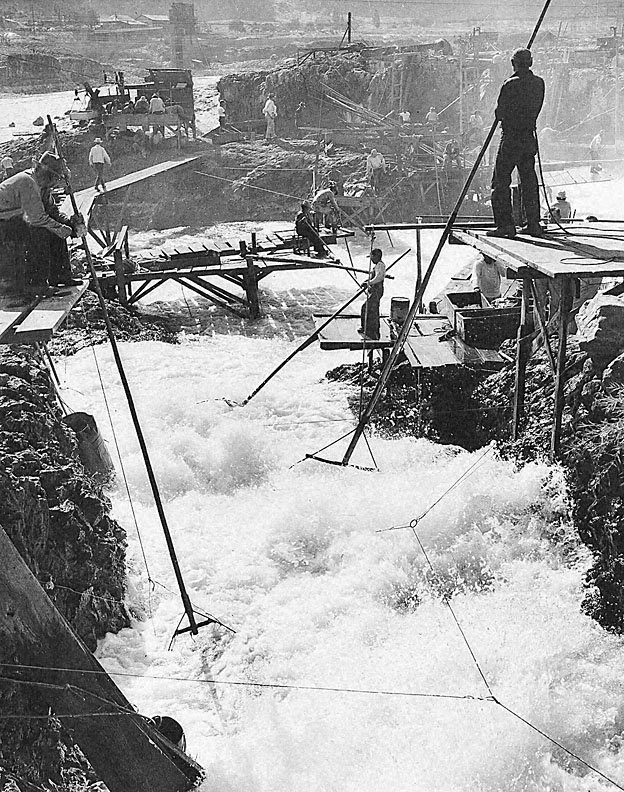
Whatever happens to the salmon happens to us. We're intimately connected with salmon in the rivers.
We protect our lands and waters - we preserve our plants, roots, wolves, grizzly bears, everything…because they're all connected - connected to the fish that make that wheel go around in Our Life.
If you look at animals or plants as spiritual beings, that will give you a different perspective on how you treat them.
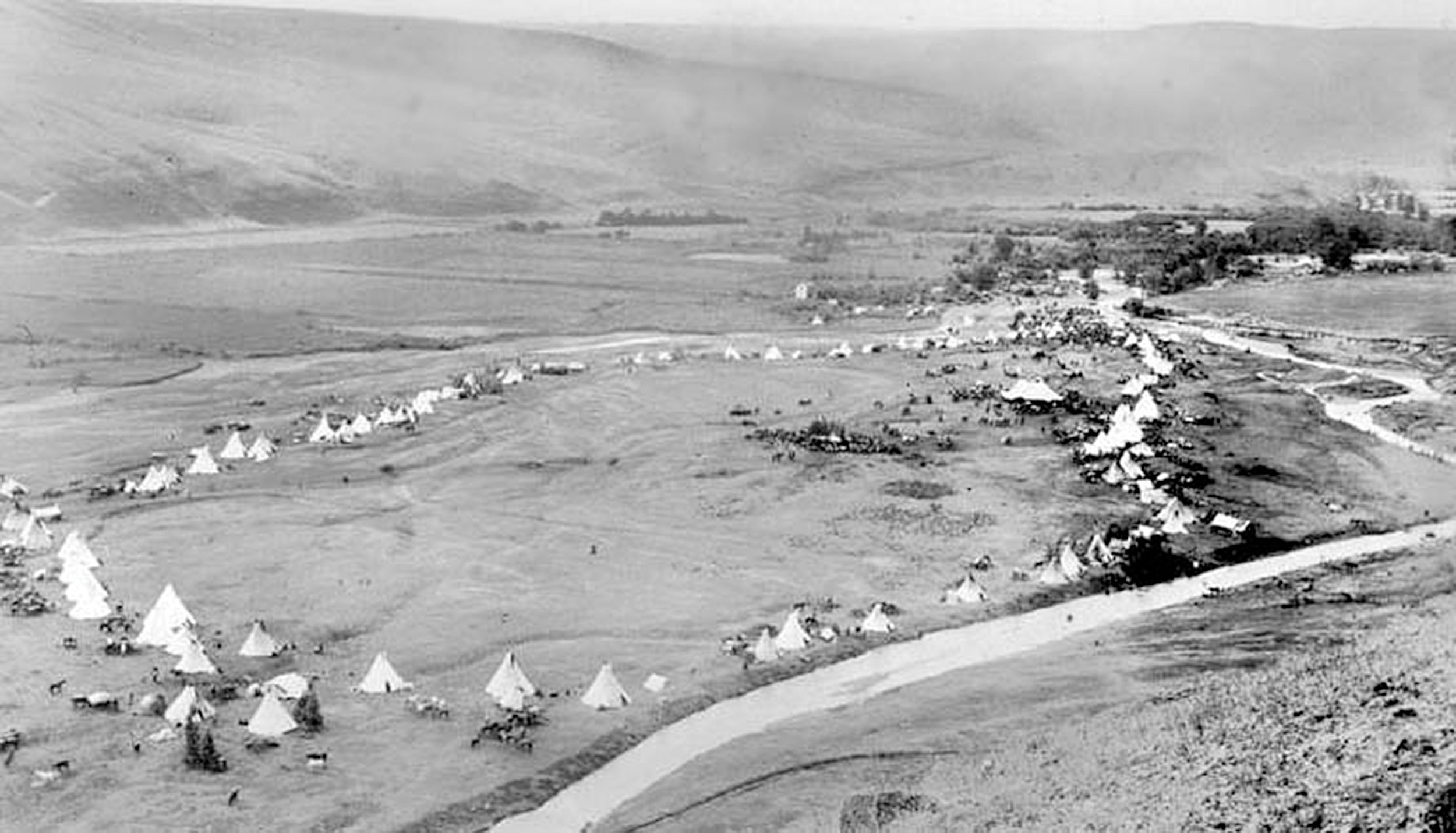
OUR TREATIES PROTECT MOTHER EARTH & OUR PEOPLE
FREE THE SNAKE RIVER
We are part of the salmon. They have helped us. They've nurtured us.
Everything is connected from the smallest animal to the largest animal. We're all important, and we all play a key part of getting these dams removed.
Our life force is that fire from the generations before - is that treaty that lets us rise as young people.
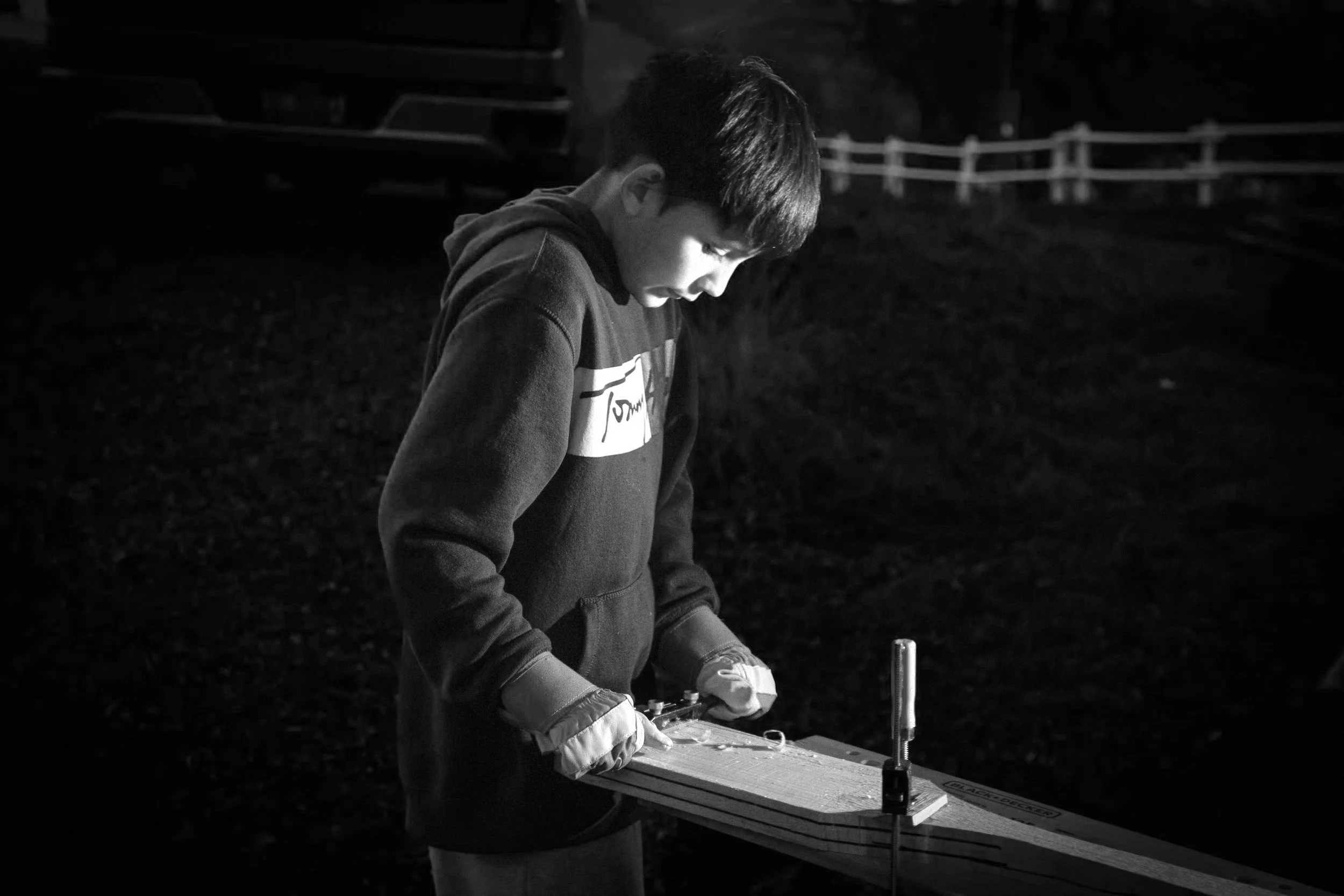
A young boy wearing a hoodie and gloves is working on a woodworking project outdoors at night, using a handsaw on a piece of wood secured on a worktable.
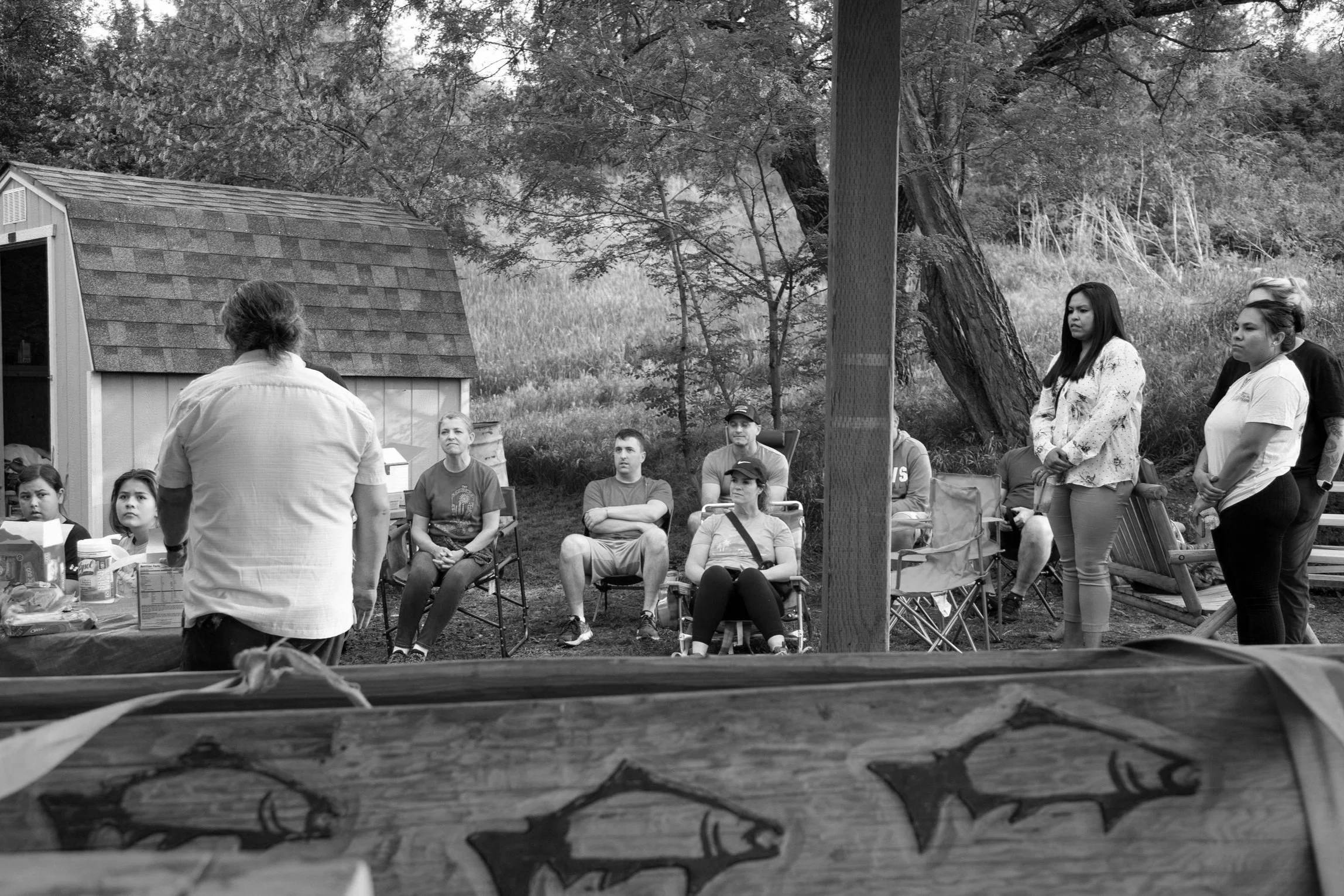
A group of people gathered outdoors for a meeting or presentation. Several individuals are seated on chairs, attentively listening, while others stand nearby, in front of a small building with a shingled roof. The setting is natural with trees and grass in the background.
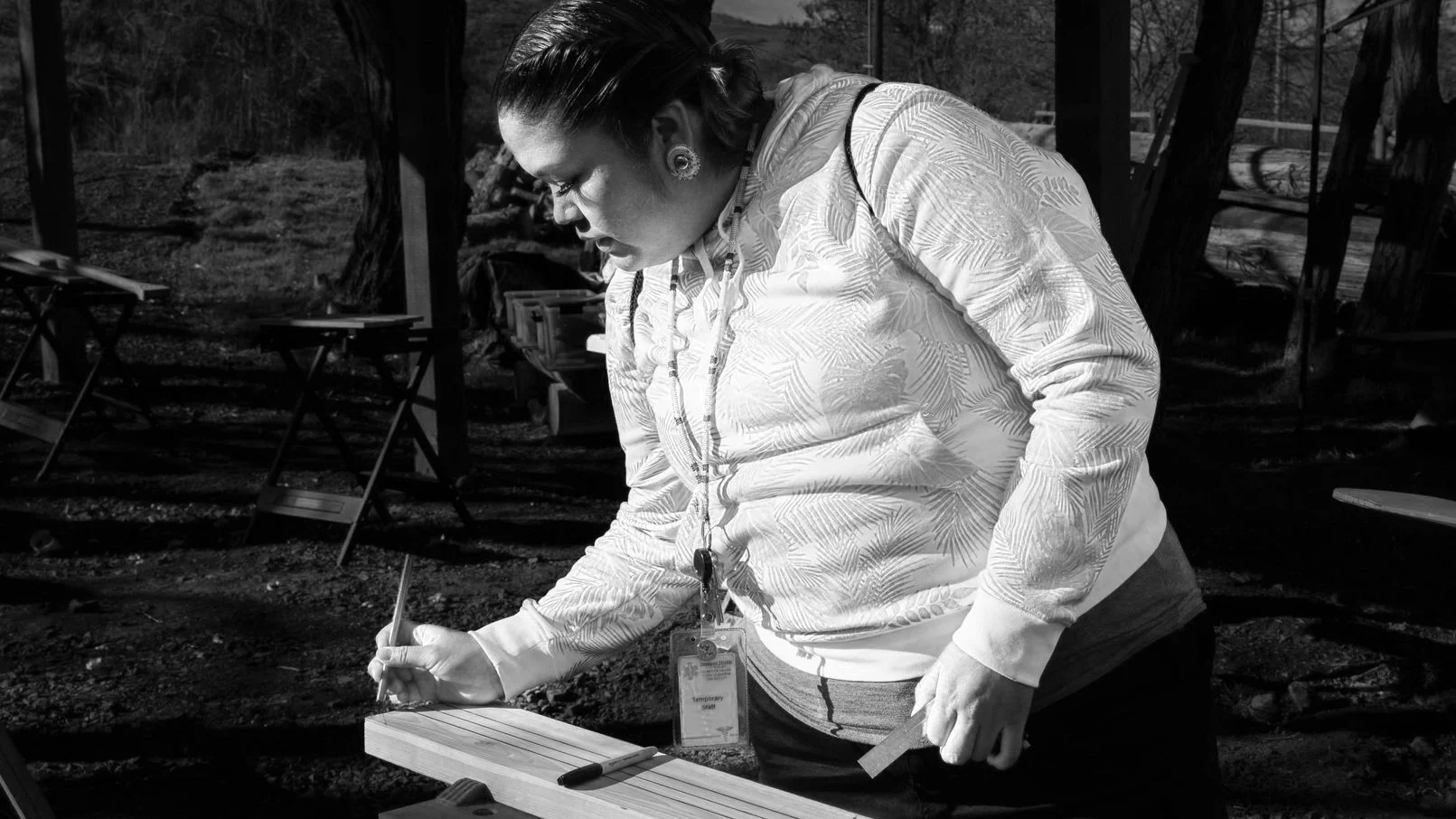
A woman wearing a patterned hoodie and earrings, with an ID badge around her neck, is writing on a piece of wood with a pen outdoors with trees and tables in the background.
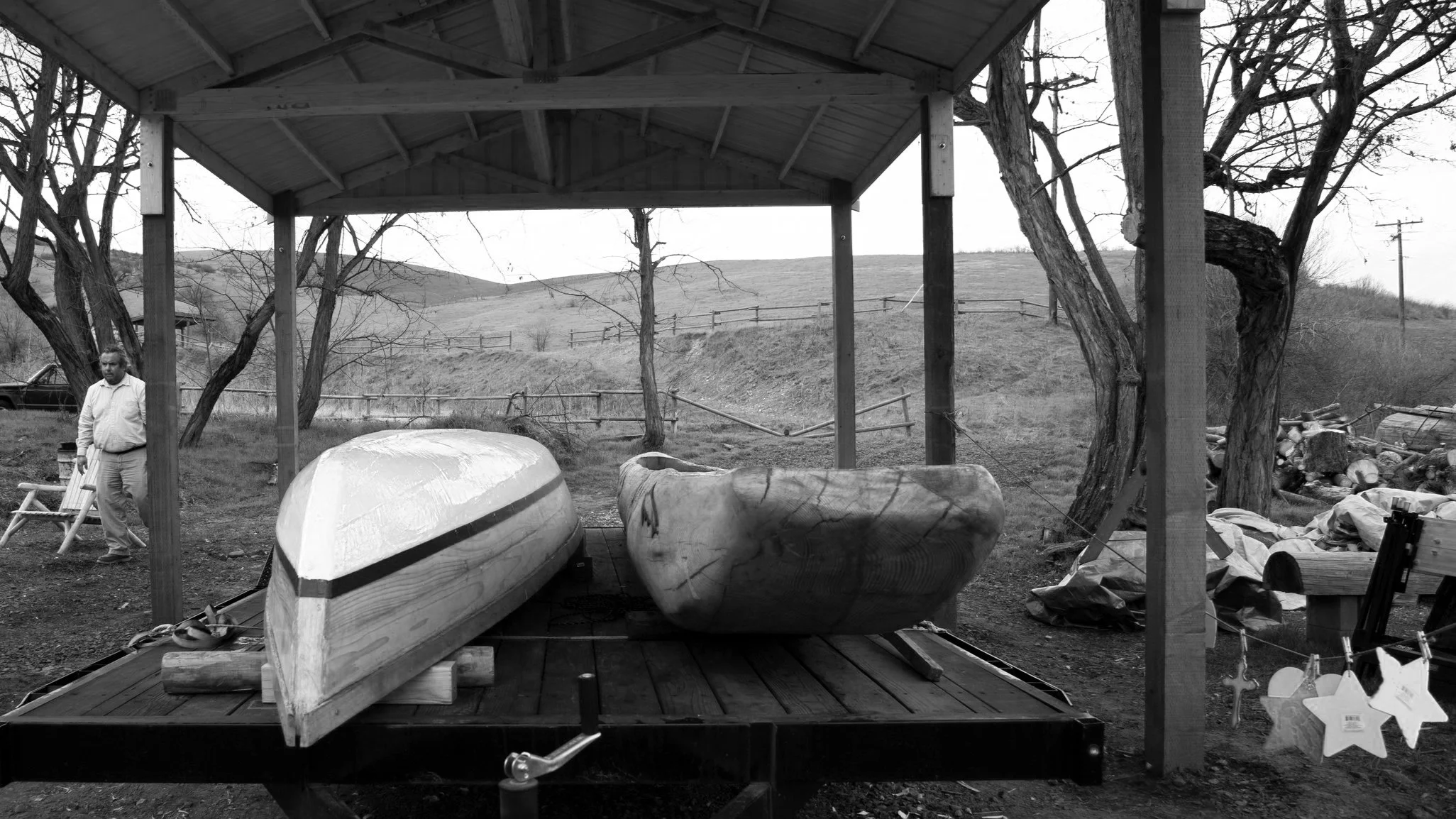
Black and white photo of a park or outdoor area with trees, a wooden pavilion, kayaks, and a man standing near a bicycle.
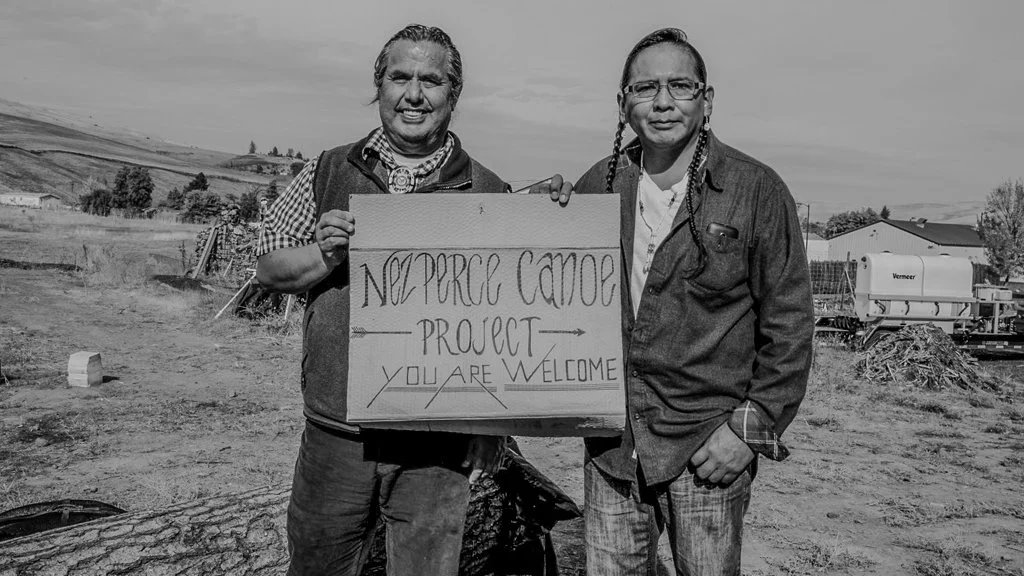
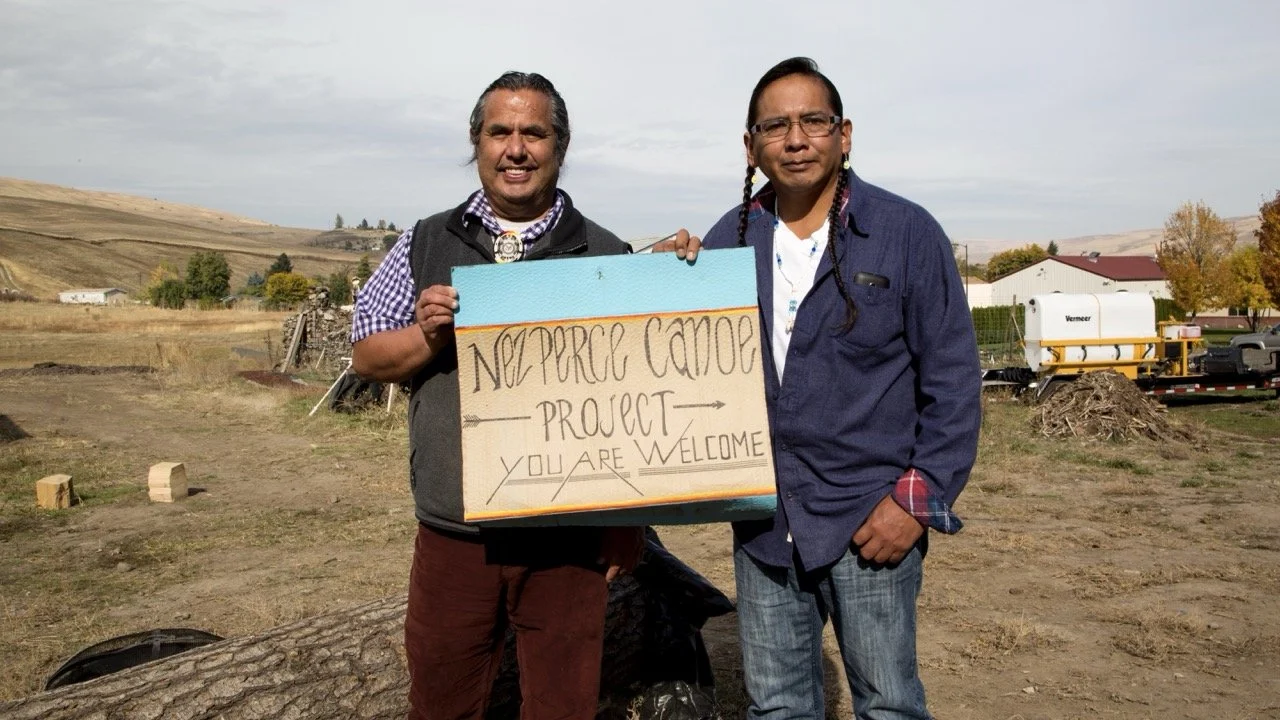
Two indigenous men standing outdoors, holding a sign that reads "NO PER CAPE CAME PROJECT YOU ARE WELCOME" in a rural area with hills and farm equipment in the background.
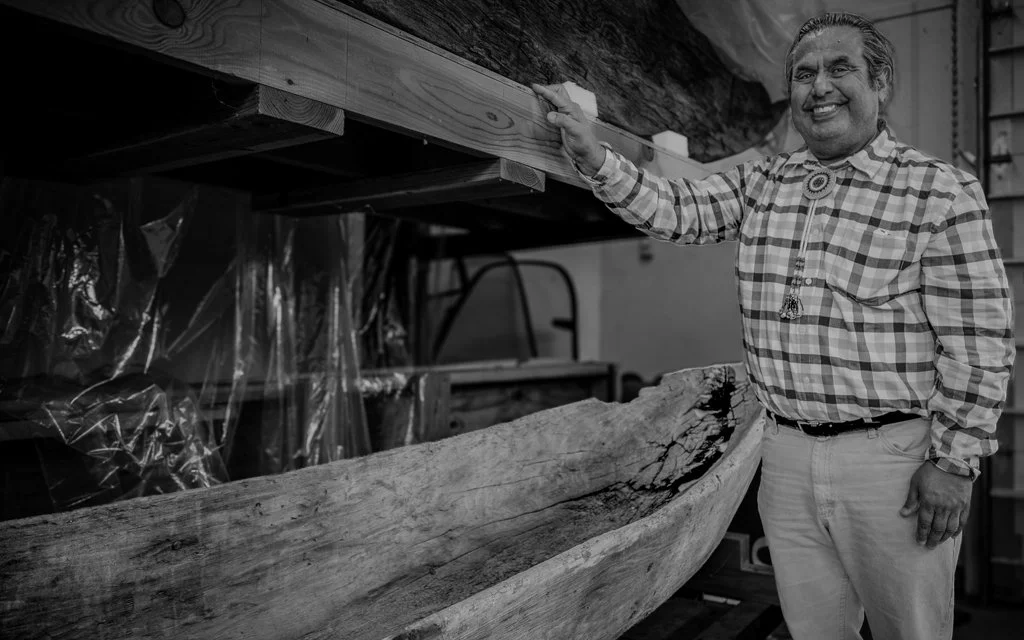
A man in a checked shirt and khakis smiling and standing beside a large wooden canoe or boat in a workshop.

A young girl with shoulder-length hair and a hoodie, smiling confidently, with two boys blurred in the background.
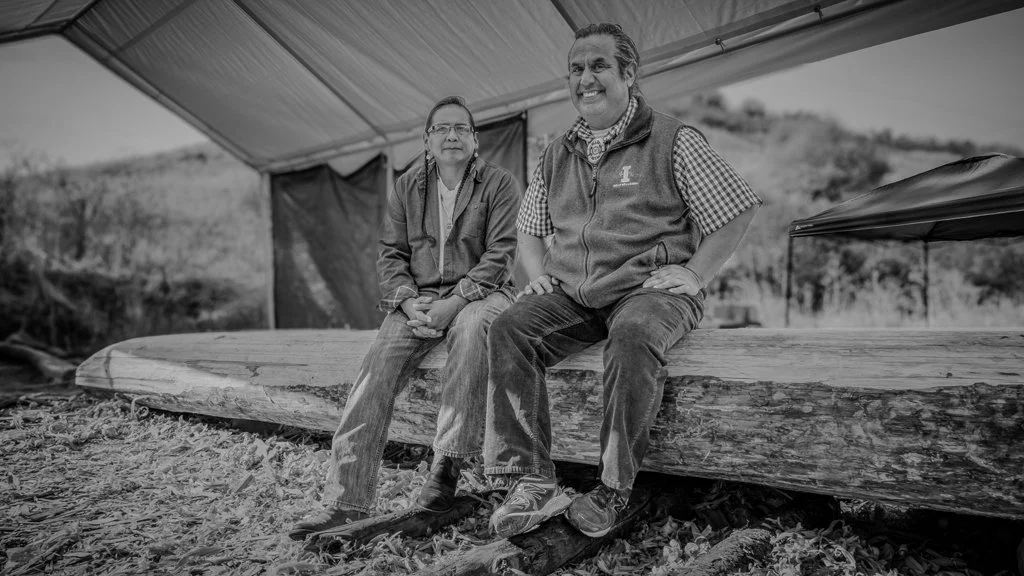
Two people sitting on a large log in front of a tent outdoors in black and white.

A smiling boy with a missing front tooth in a crowded outdoor setting.

Two young girls sitting on a wooden surface outdoors, smiling and holding a smartphone, with bamboo plants in the background.

A young girl with long hair looking at a jar of canned salmon she is holding in her hands, indoors with other people in the background.
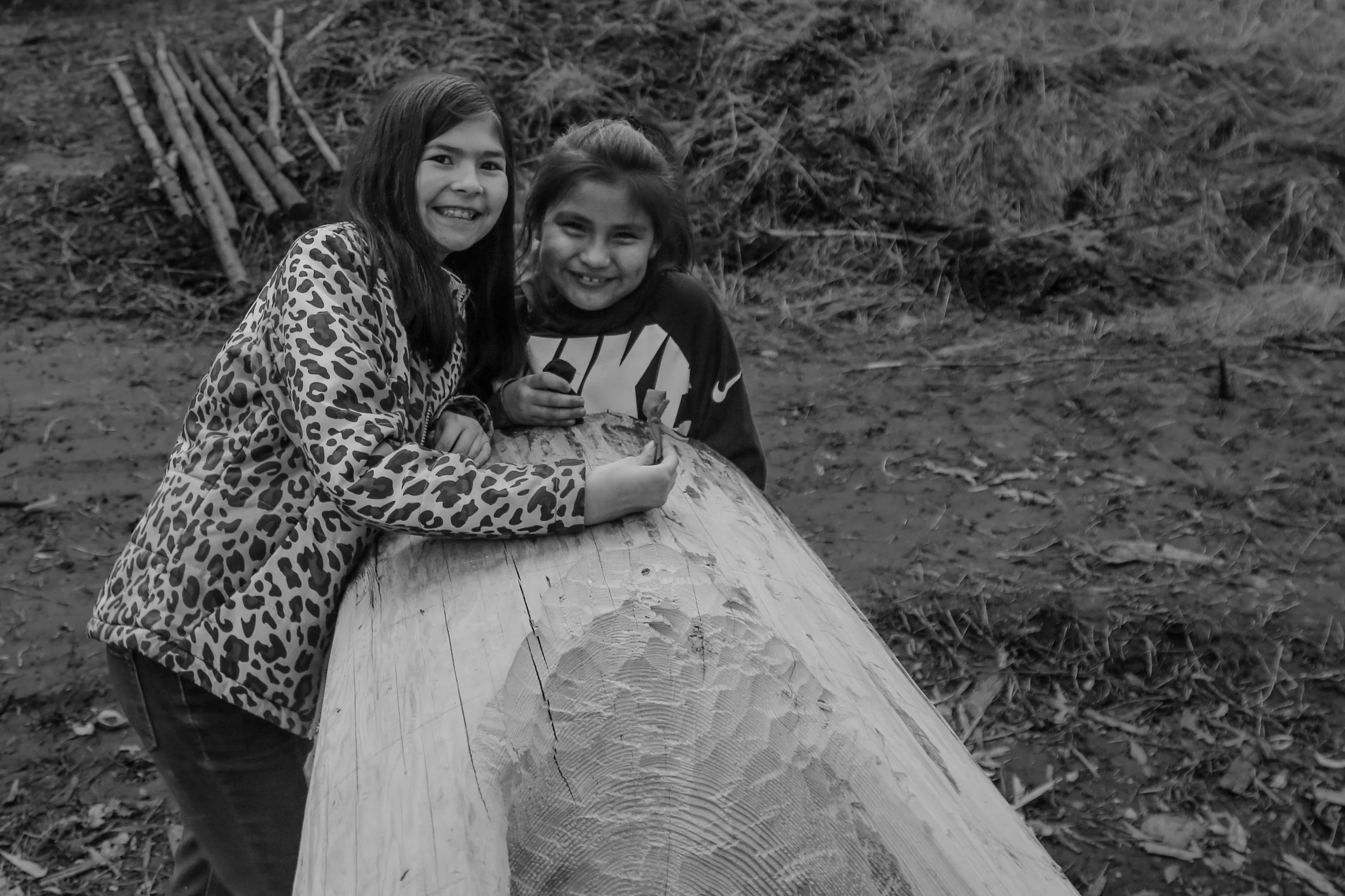
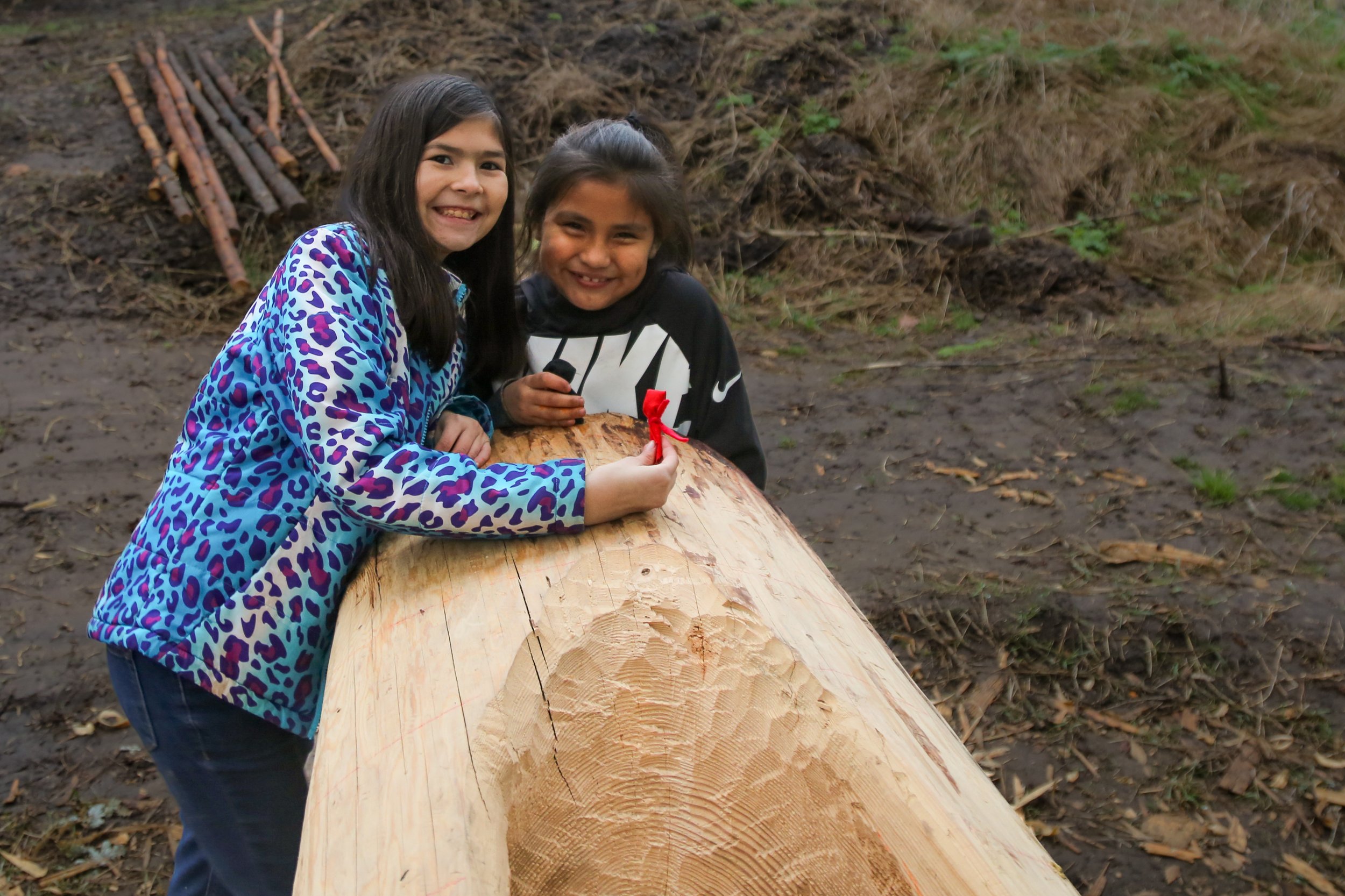
Two young girls smiling and leaning on a large log outdoors, with a pile of sticks in the background.
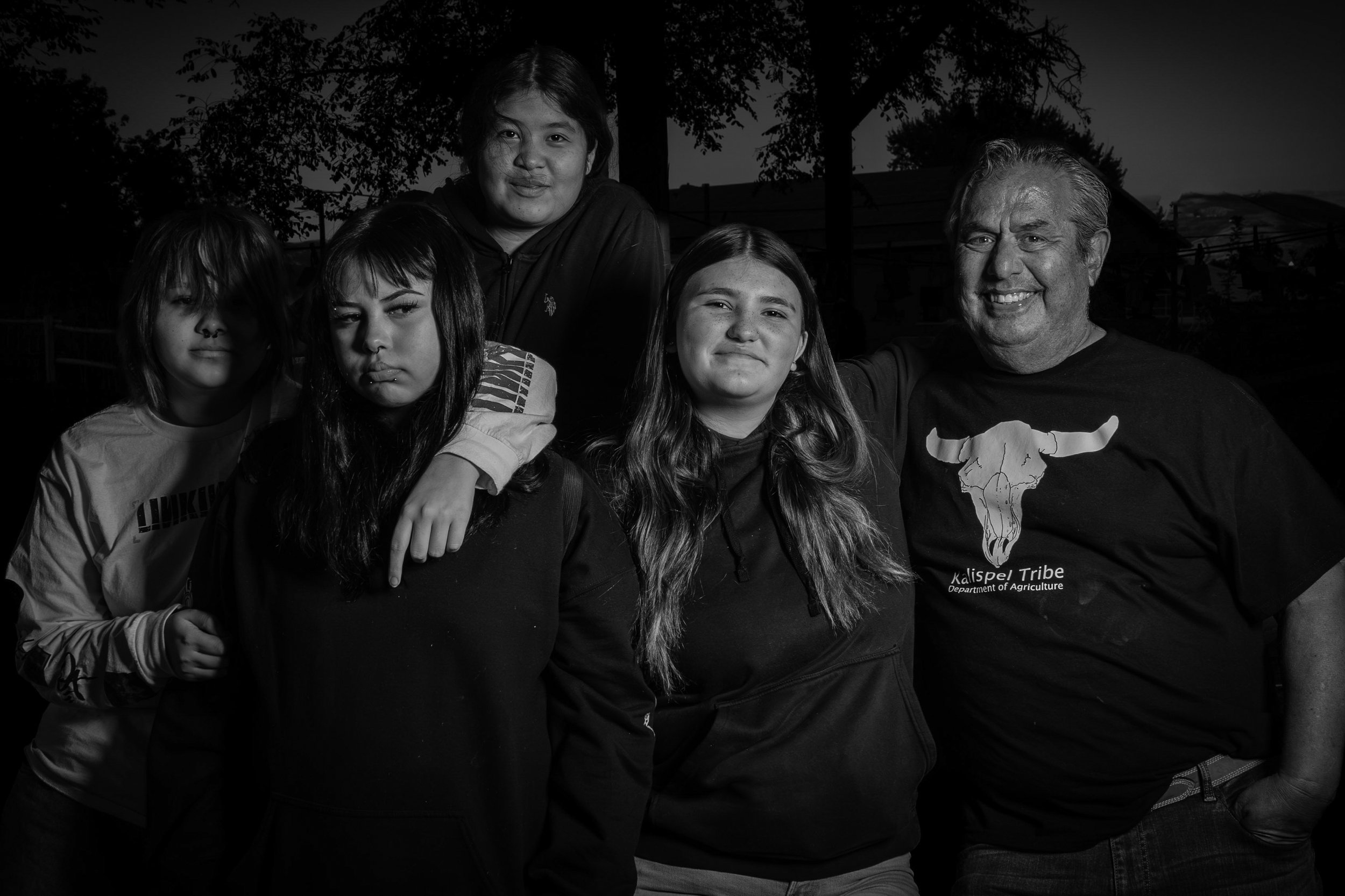
Group of five people smiling and posing outdoors at dusk, with trees and a fence in the background. The man on the right is wearing a black T-shirt with a longhorn skull and text that reads 'Kalispel Tribe Department of Agriculture.' The group includes three females and one male, all wearing casual clothing.

A person woodworking inside a large wooden pipe or log, using tools to carve or shape the wood, with wood shavings scattered around.

A man smiling and winking, wearing a black T-shirt with a bull skull graphic and the text 'Kalispel Tribe Department of Agriculture', standing in front of a wooden background.
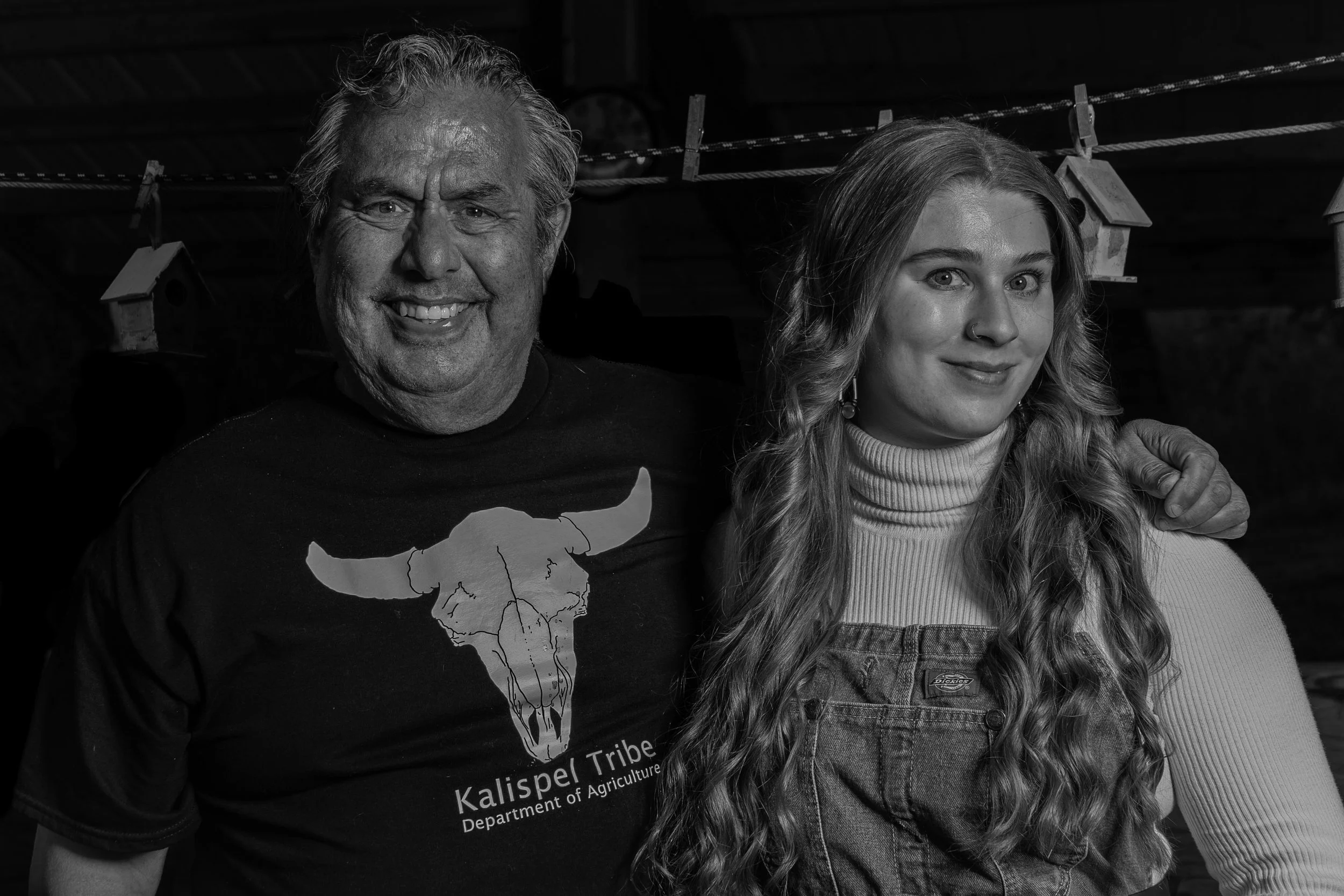
A black and white photo of an older man and a young woman side by side, smiling. The man has long gray hair and is wearing a black t-shirt with a graphic of Texas and the words "Kalispe Tribal" and "Department of Agriculture". The young woman has long wavy hair, a nose ring, and is wearing a turtleneck sweater with denim overalls. They are in an indoor setting with background elements including a roof and hanging birdhouses.

A young boy wearing glasses and a striped hoodie is looking at his phone, with other kids blurred in the background.
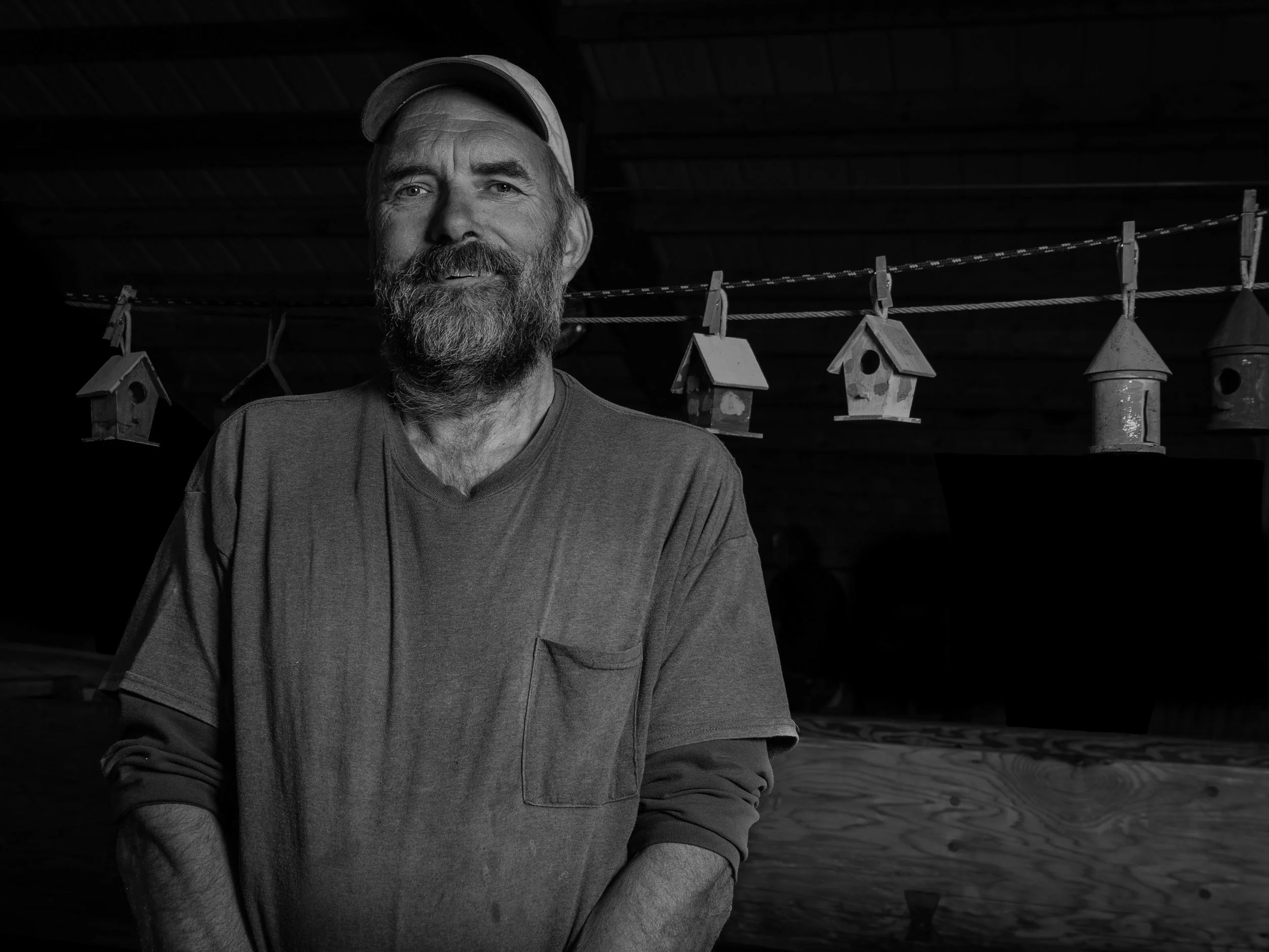
A man with a beard wearing a baseball cap and casual shirt, standing in front of a row of small birdhouses hanging on a wire under a dark roof.
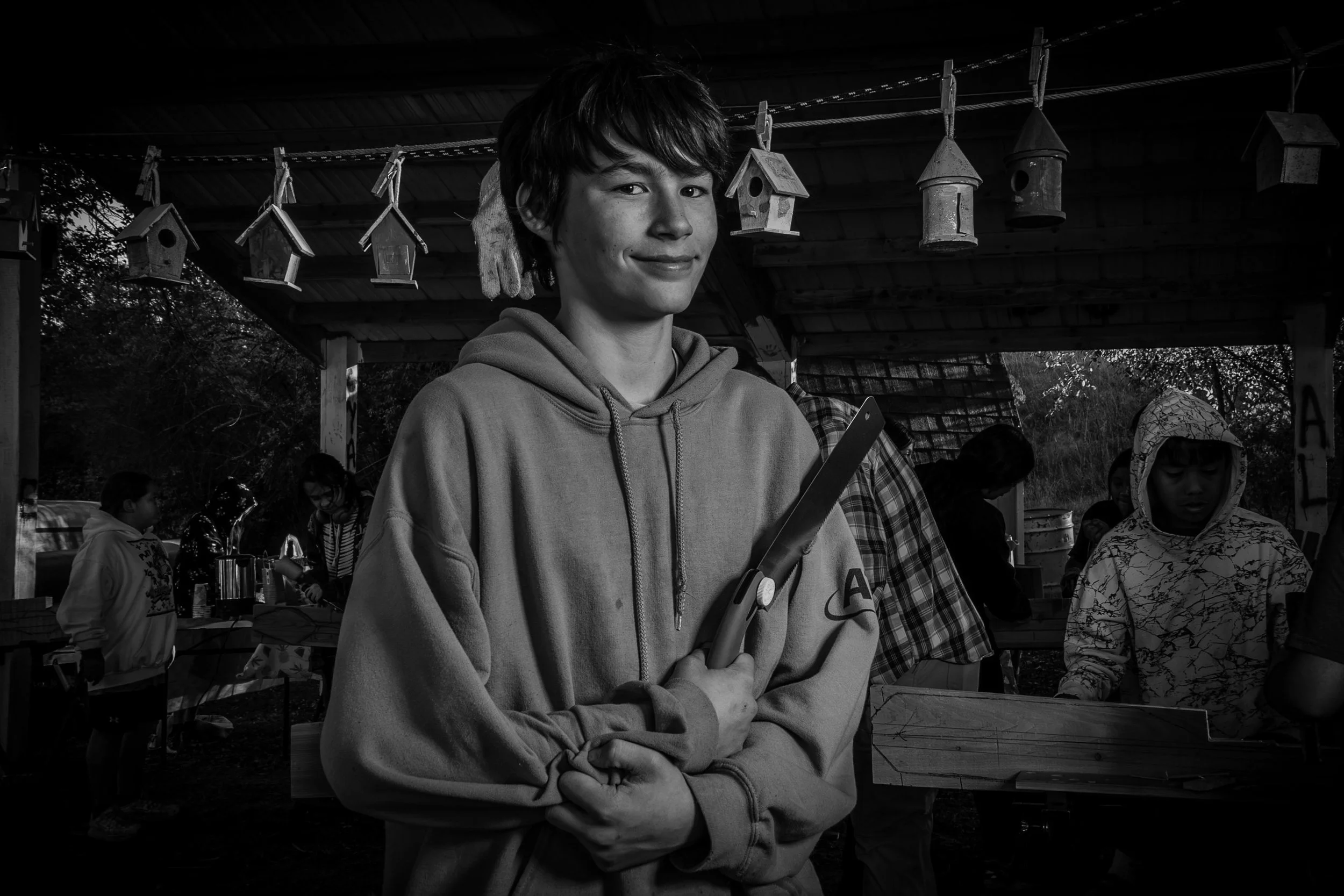
A young person standing outdoors, holding a large knife, with a smile. Several children and birdhouses hanging from wires are in the background.
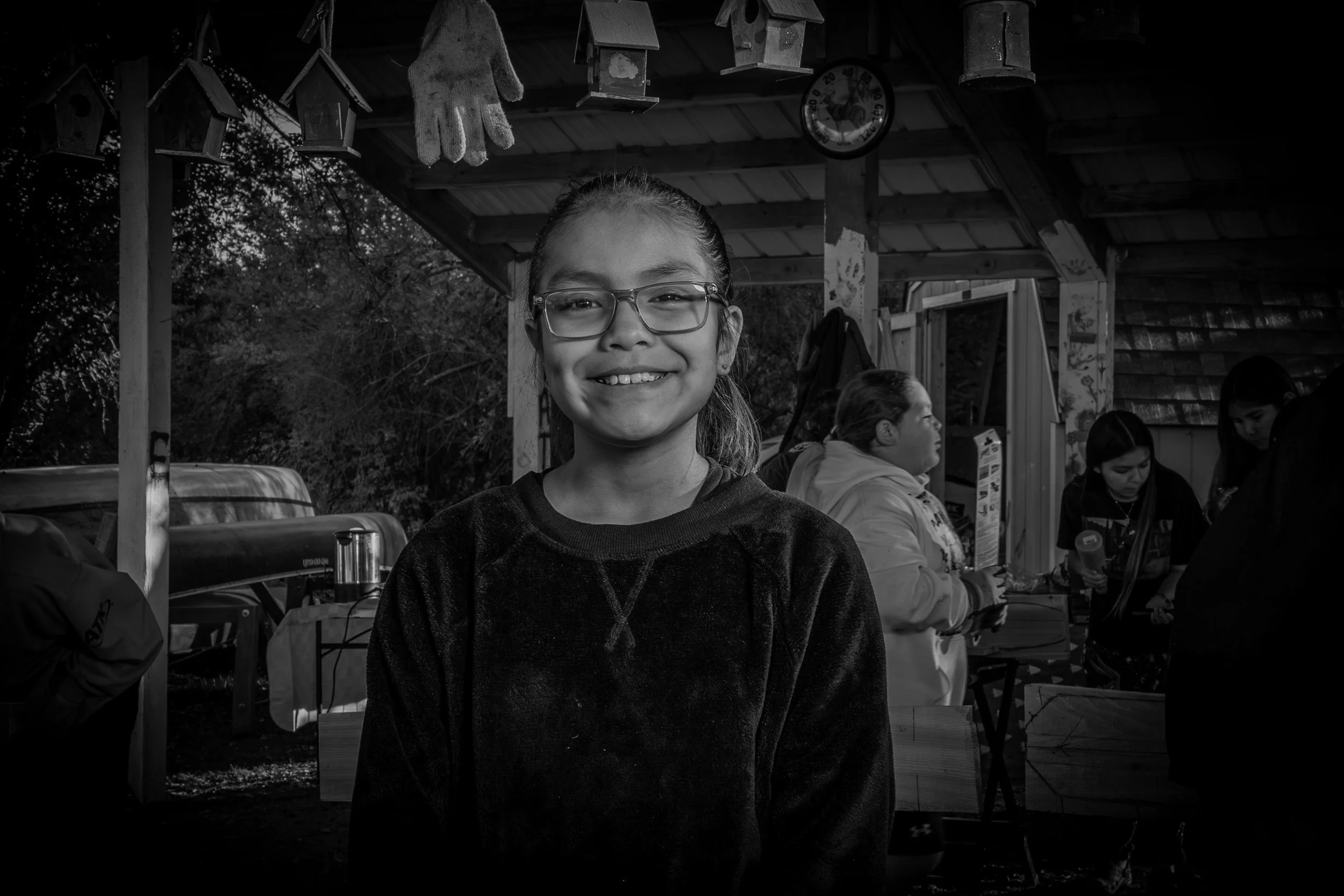
A smiling girl with glasses standing outdoors at a gathering, with other people in the background under a wooden shelter with birdhouses and gloves hanging.

A young person with long hair, wearing a Nike hoodie and a cap, looking at the camera with a neutral expression. The background shows a partially visible person and a structure with birdhouses and a clock.

A girl with long wavy hair and a slight smile, wearing a collared shirt, stands in a room with other children, some wearing glasses, in front of a background of bookshelves.
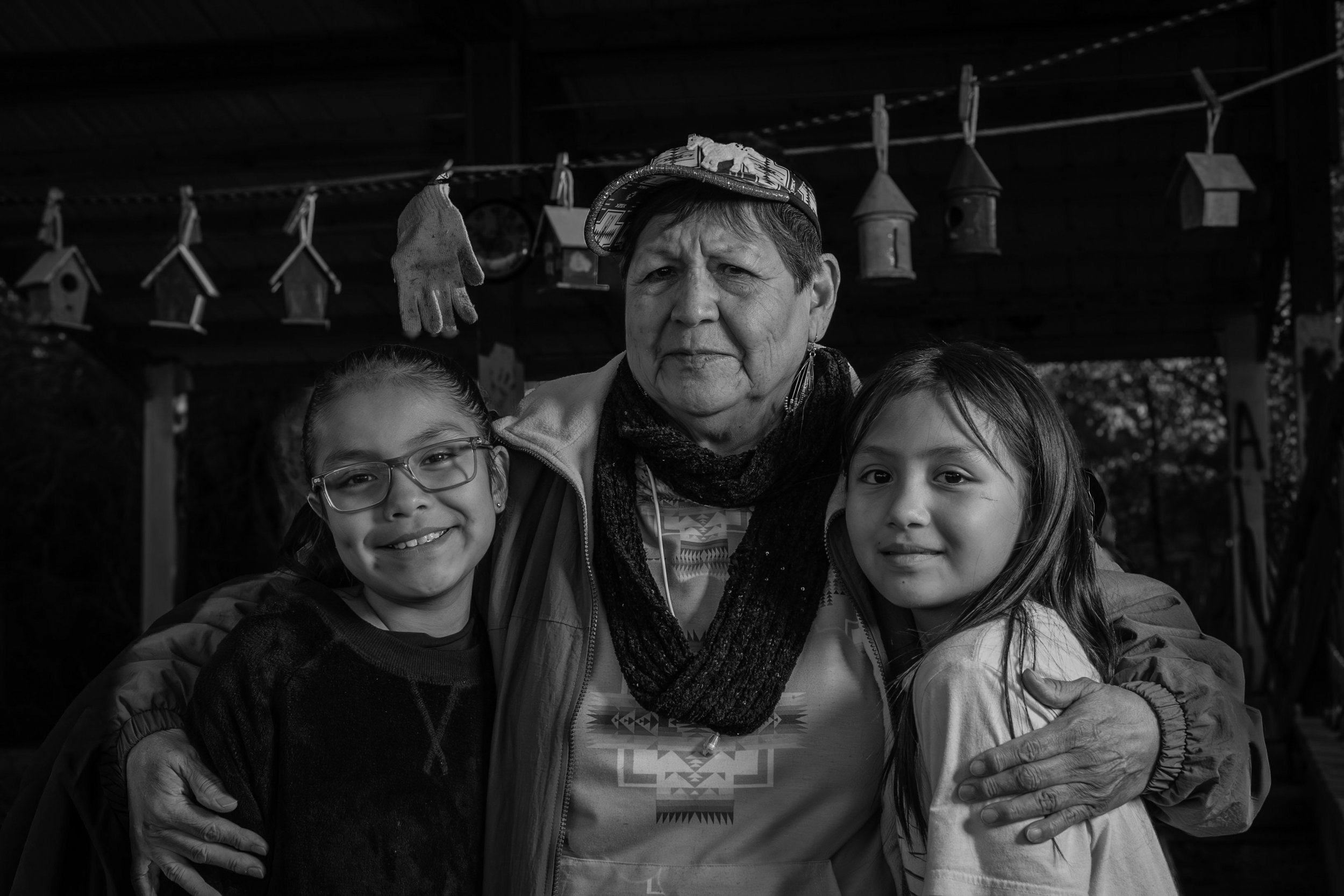
An elderly woman with short hair and two young girls, one with glasses and one with long hair, standing close together outdoors, with birdhouses hanging in the background.

Black and white photo of a young girl with curly hair smiling at the camera, standing in front of a dark background with a clock on the wall. Two other children are partially visible behind her.
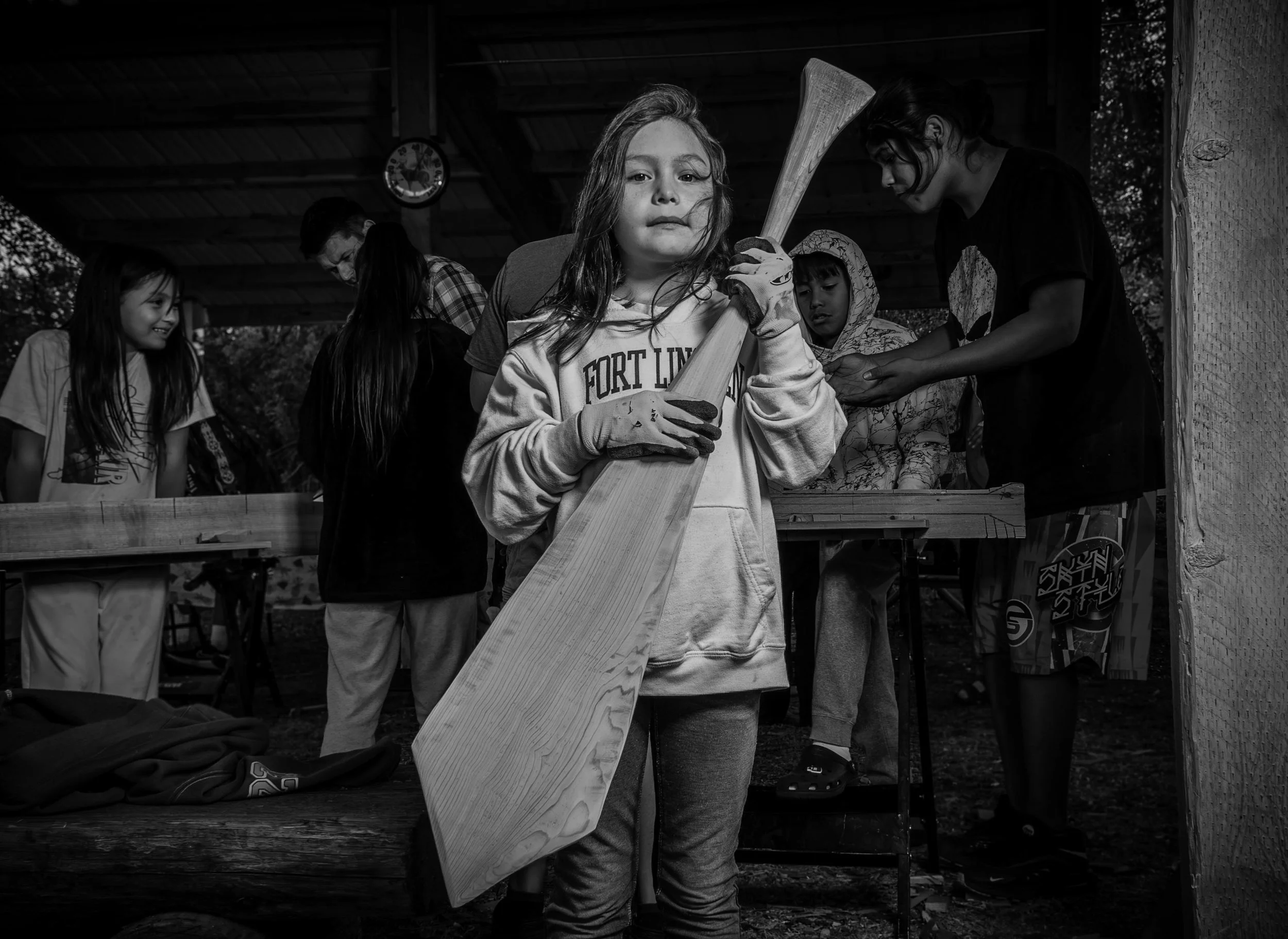
A girl holding a wooden paddle stands among others in a group, possibly preparing for an activity, under a wooden roof structure.
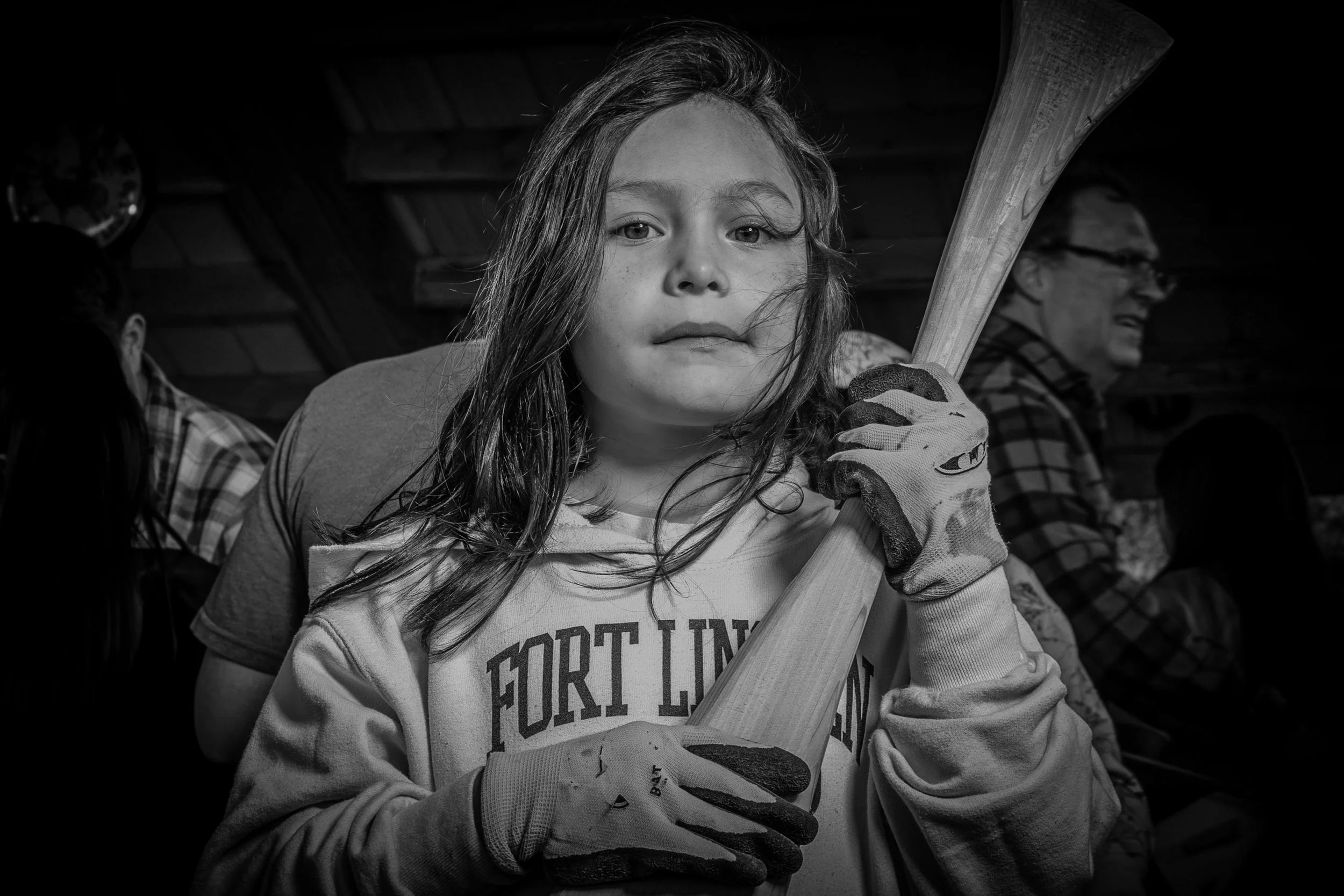
A young girl with long hair holding a baseball bat, wearing gloves, indoors. Two men are visible in the background, one wearing glasses.
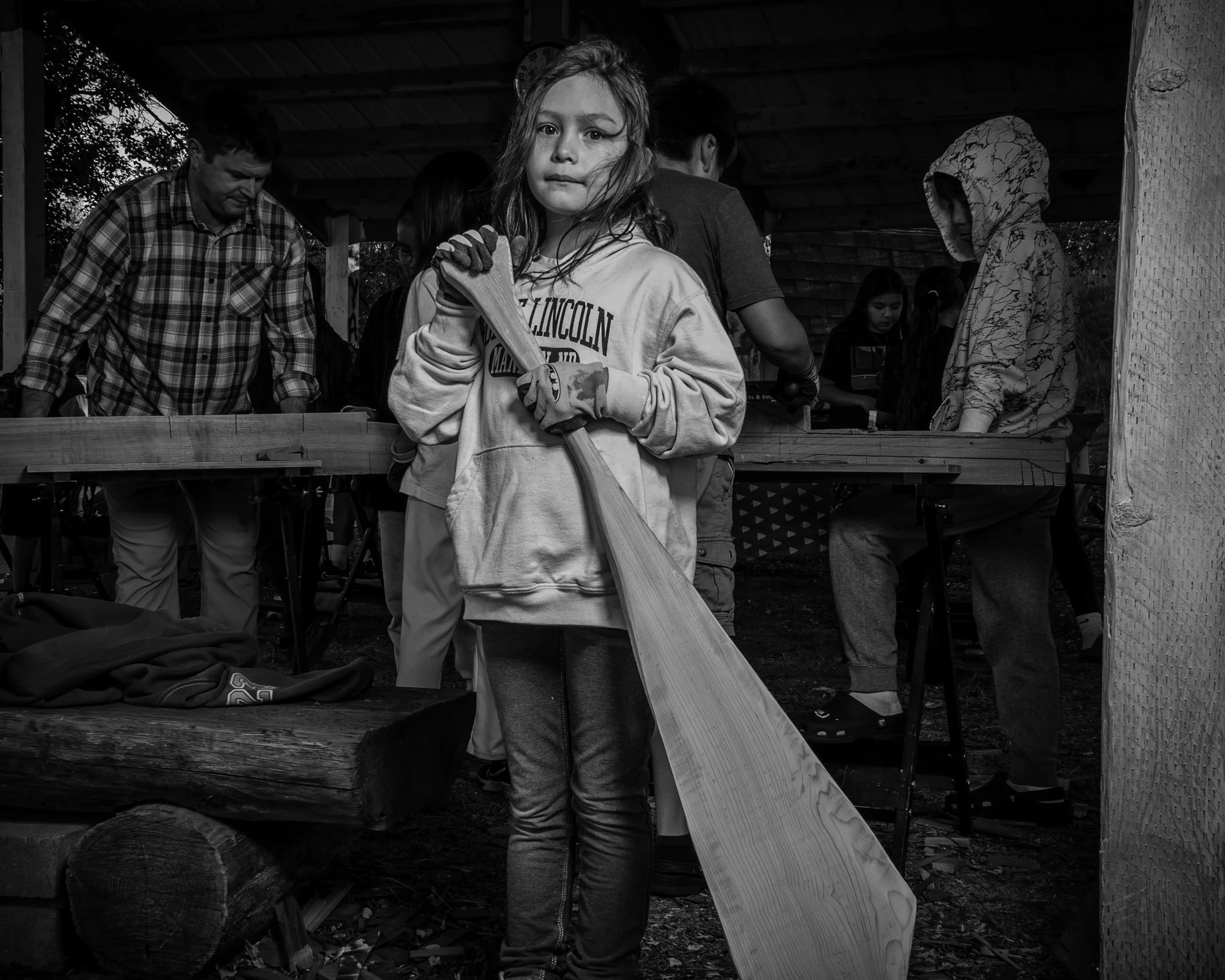
A young girl with wet hair holding a large hammer, standing in front of a group of people at an outdoor event under a wooden shelter. The scene is in black and white.

A black and white photo of a man and three children outdoors, standing in front of a wooden structure with hanging birdhouses, trees, and a fence.

A young boy standing outdoors under a porch with birdhouses hanging from a string overhead, wearing gloves and a t-shirt featuring a running man silhouette, with other children in the background.
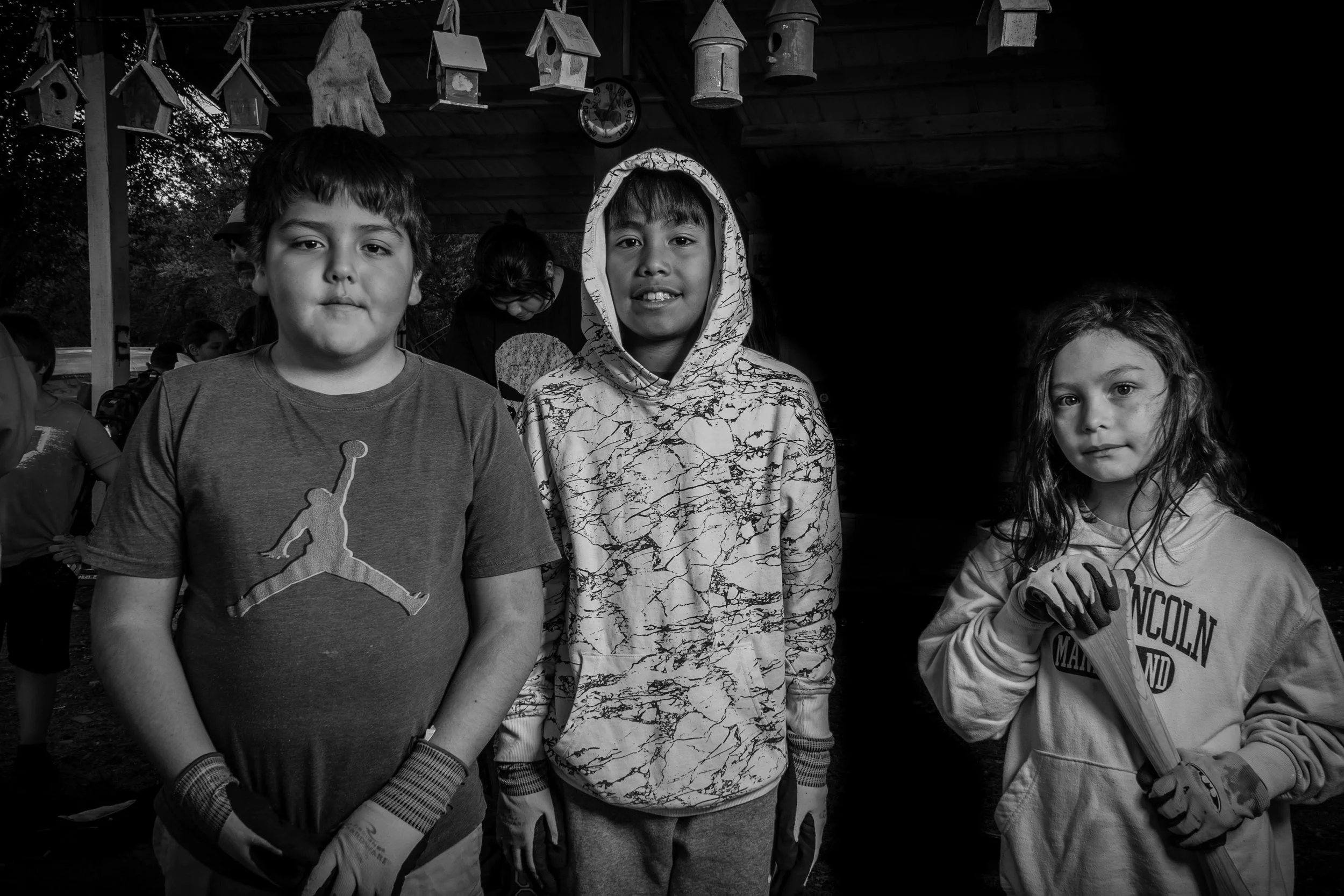
Black and white photo of three children standing outdoors, looking at the camera. The boy on the left is wearing a T-shirt with a basketball logo. The child in the middle is wearing a hooded sweatshirt with a marble pattern. The girl on the right has curly hair and is holding a rolled-up blanket or clothing. There are other children and birdhouses hanging from a wooden structure in the background.
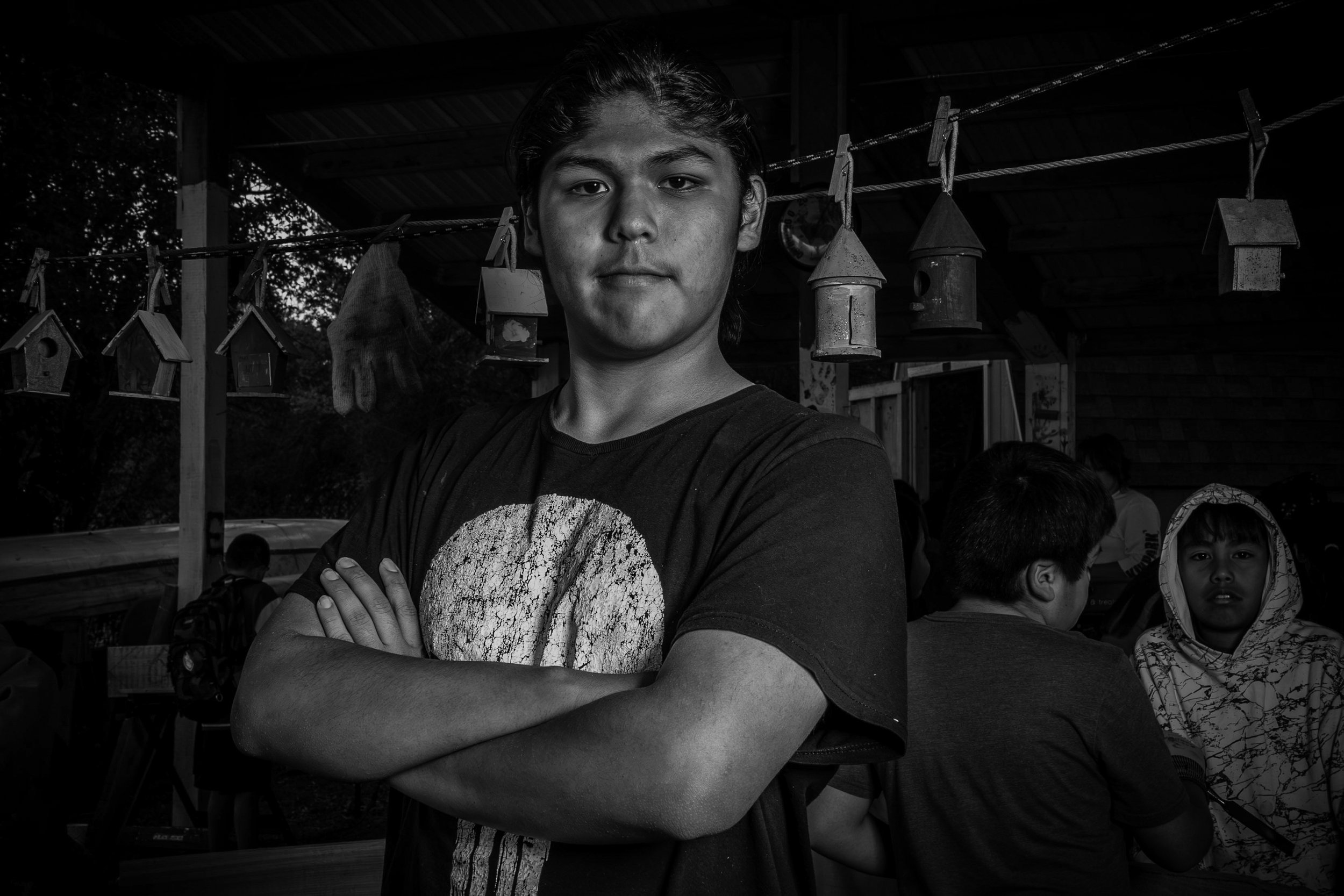
A young person with long hair tied back, standing with arms crossed, in a shaded outdoor area with birdhouses hanging on a line and a group of children in the background.
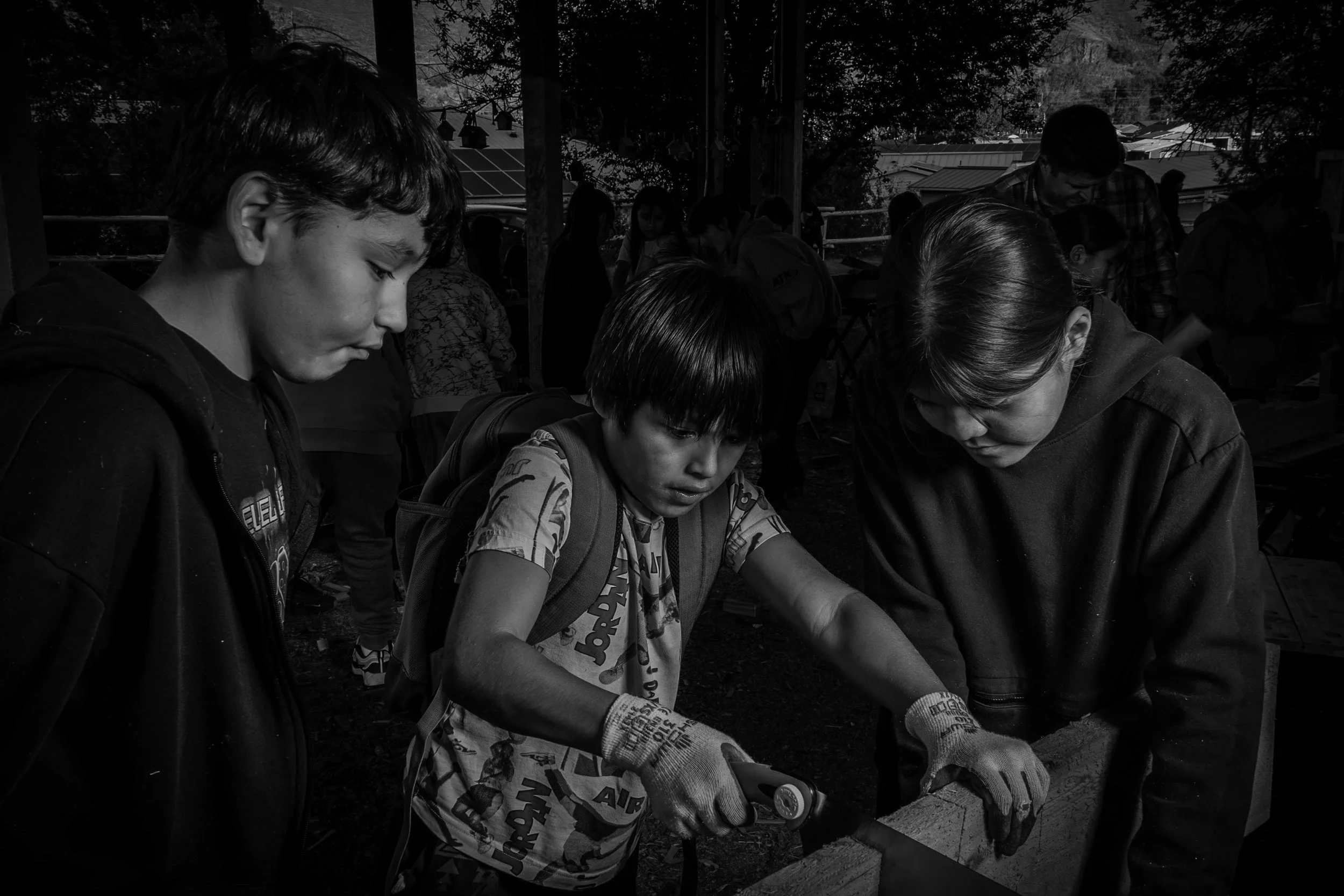
A group of children and adults gathered outdoors, looking down at something and engaging in an activity, with trees and rooftops visible in the background.

A woman with curly hair and a young boy wearing a beanie hat posing for a photo together. They are outdoors with birdhouses hanging in the background.

A young girl holding a wooden mallet, smiling, at an outdoor event during daytime.
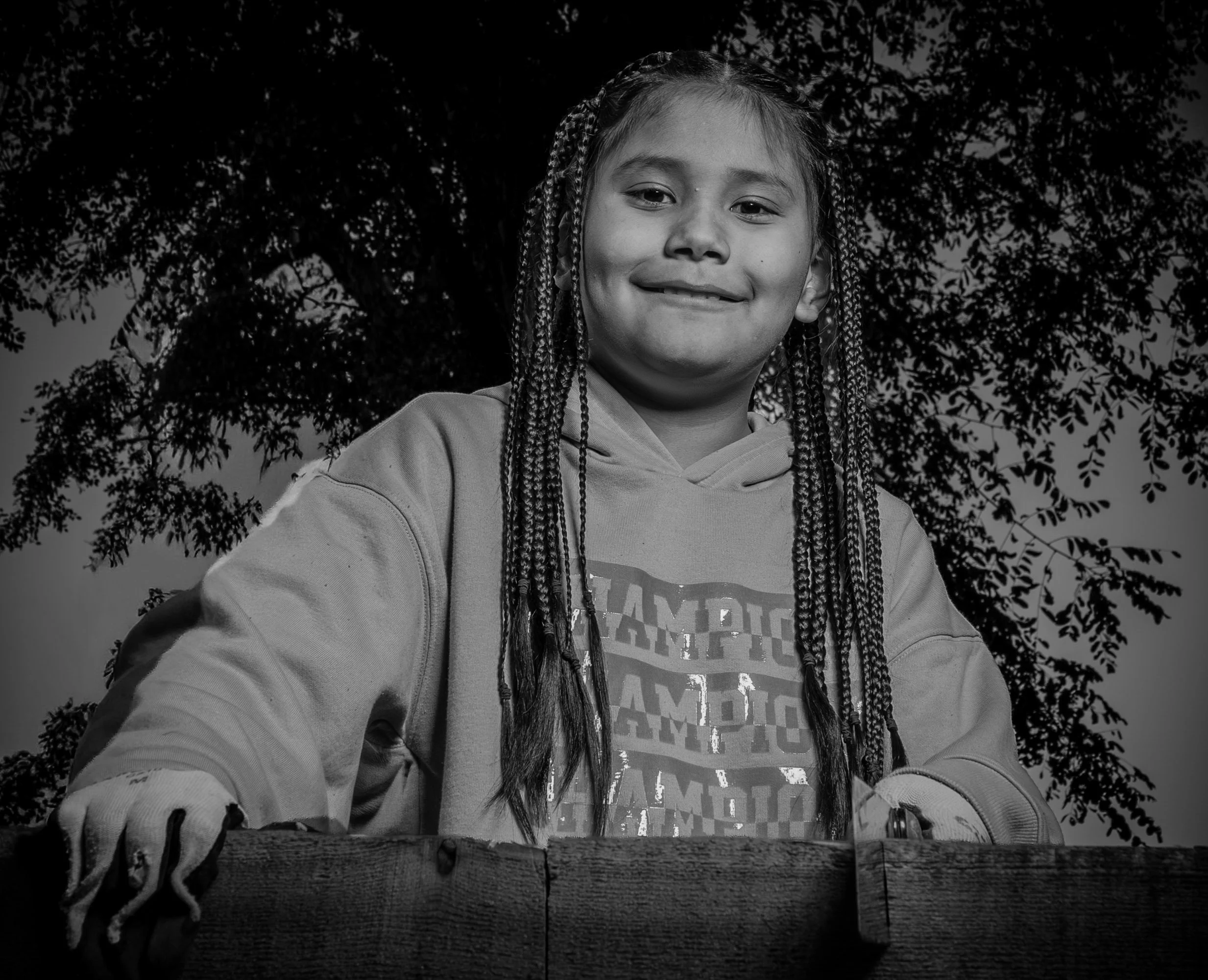
A young girl with braided hair, smiling, leaning on a wooden railing outdoors with trees in the background.

Black and white photo of a smiling woman wearing a necklace and a graphic t-shirt, with people in the background.
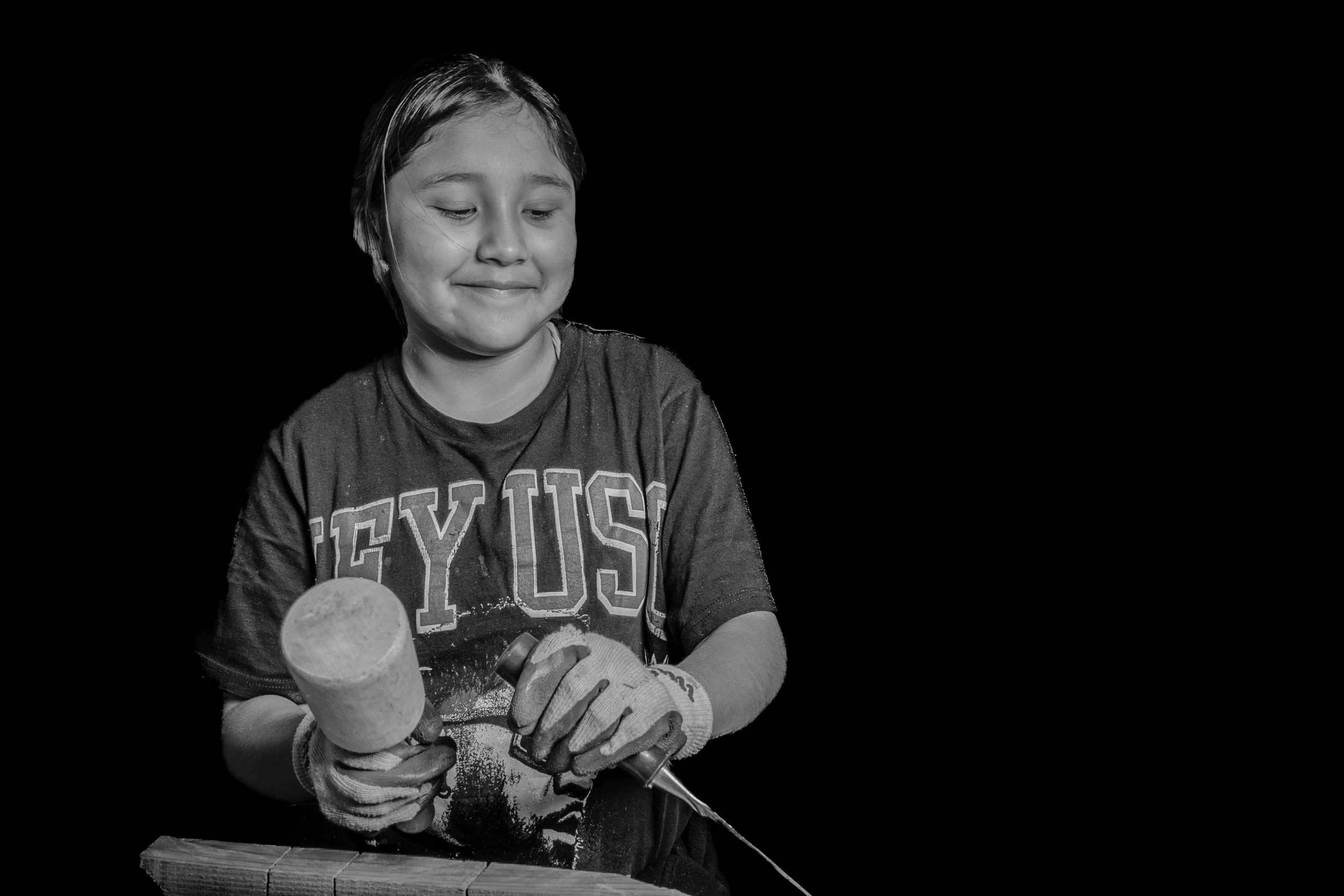
A young girl wearing a Tennessee T-shirt and gloves is holding a wooden bat in her hands, smiling and looking down, with a skateboard on the table in front of her.
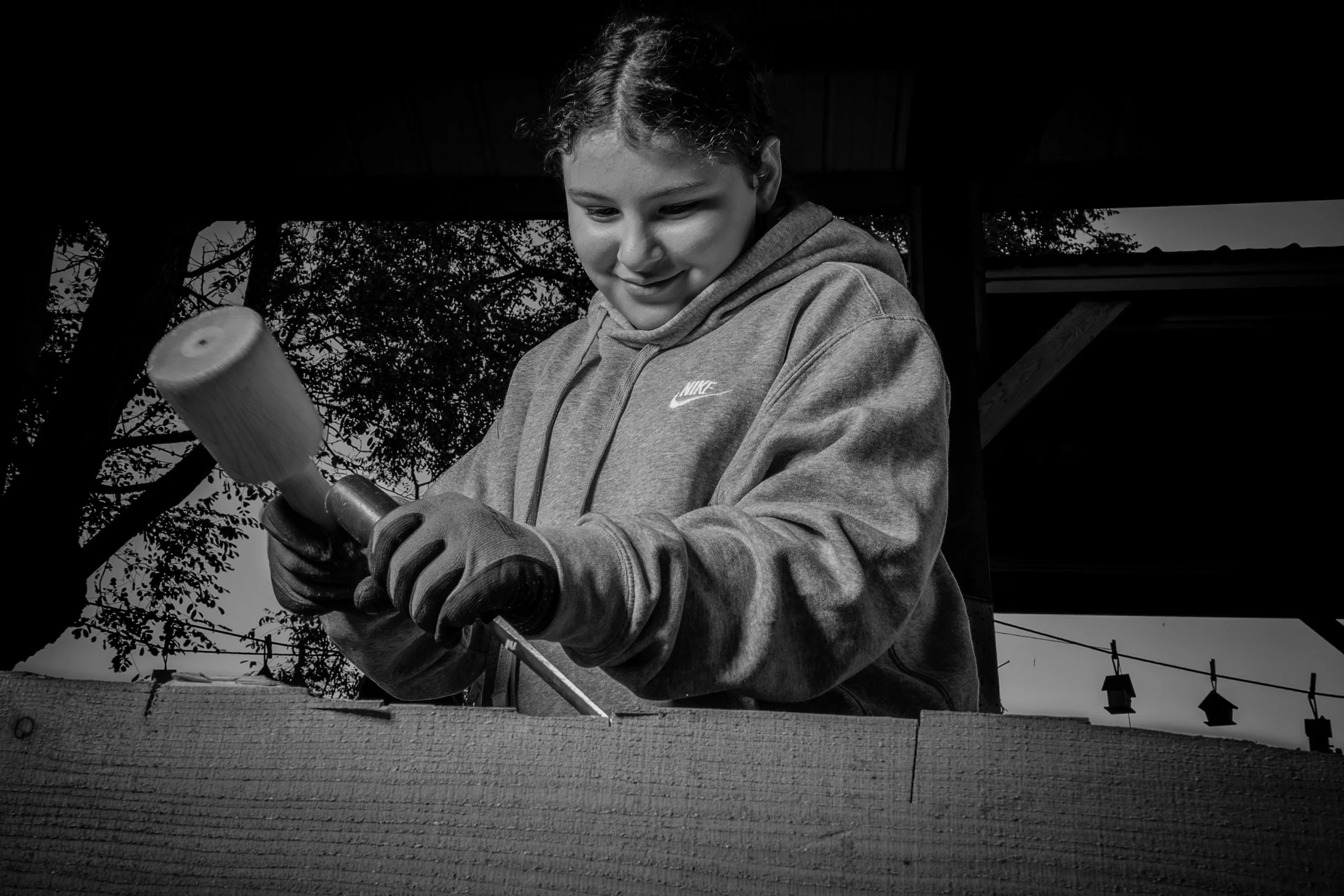
A young girl wearing a Nike hoodie and gloves, holding a mallet, preparing to hammer a wooden nail during daytime.
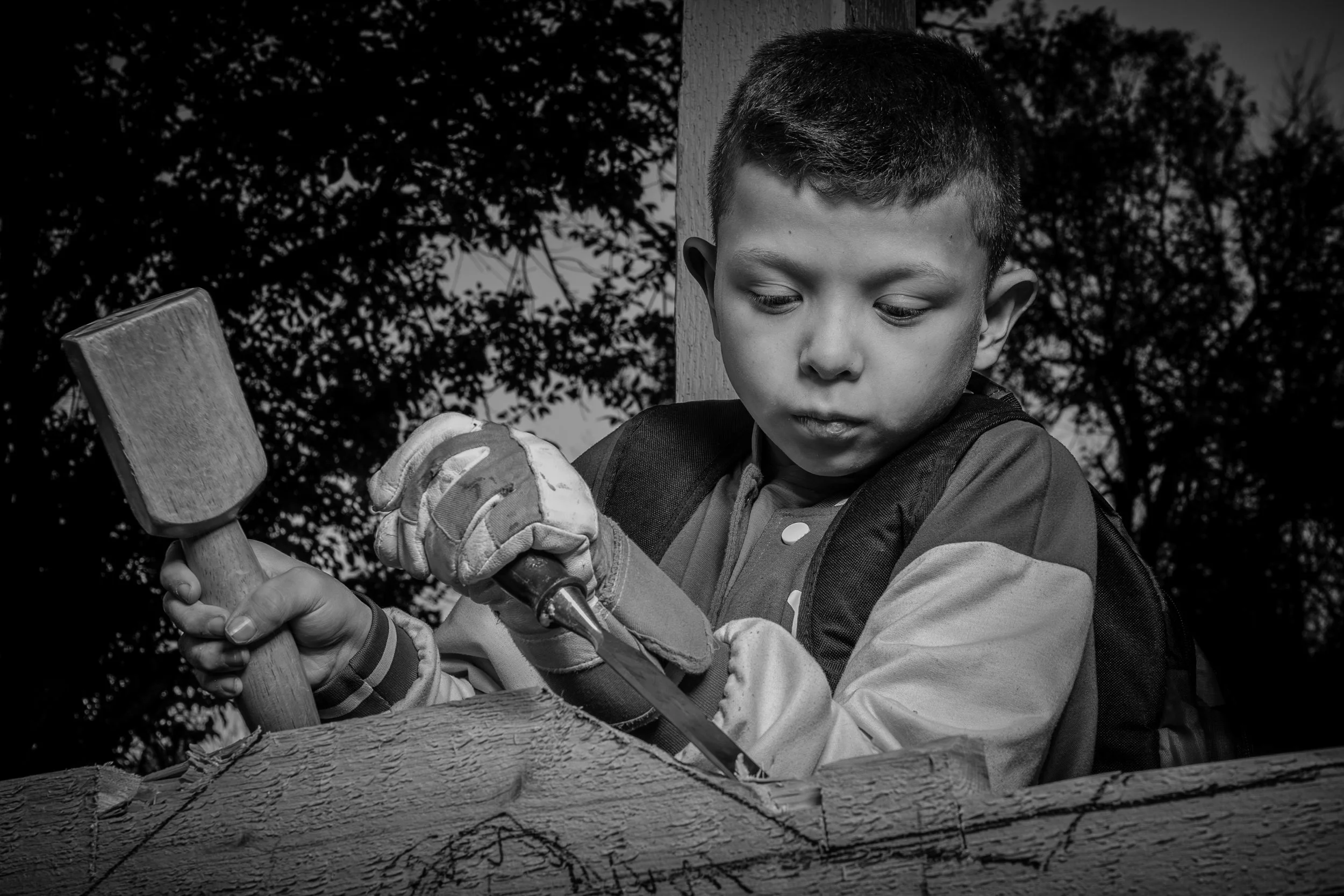
Black and white photo of a young boy holding a hammer and a saw, working on a piece of wood outdoors.
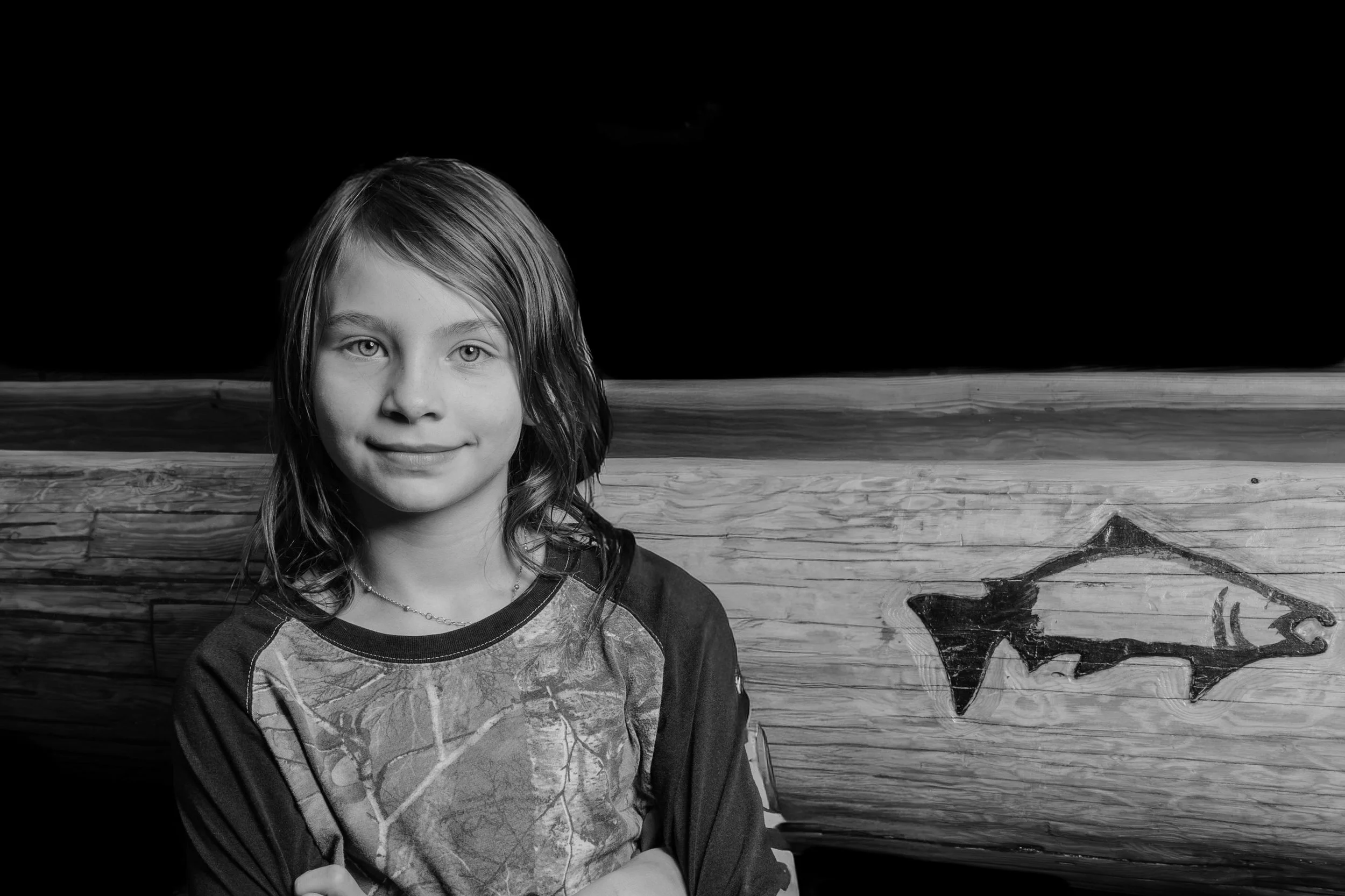
A black-and-white photo of a young girl with shoulder-length hair, wearing a graphic t-shirt and smiling slightly, standing in front of a painted wooden background.

A young girl with curly hair wearing a t-shirt with a graphic design is hammering a wooden nail. She is focusing downward at her work, wearing gloves, outdoors, with trees and a structure in the background.
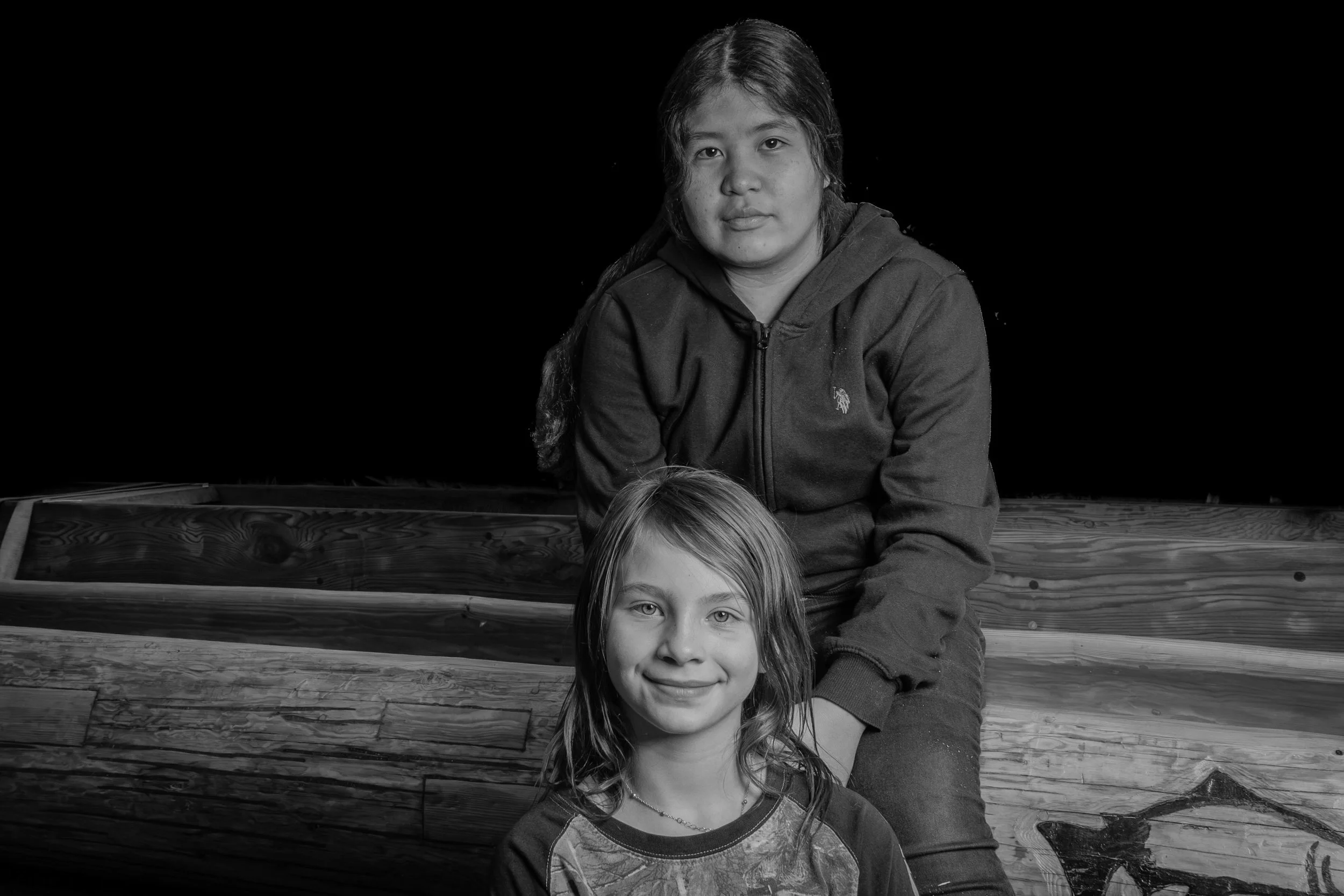
Black and white photo of two young girls, one with straight hair in front and one with wavy hair behind, posing in front of a dark background with a wooden railing.
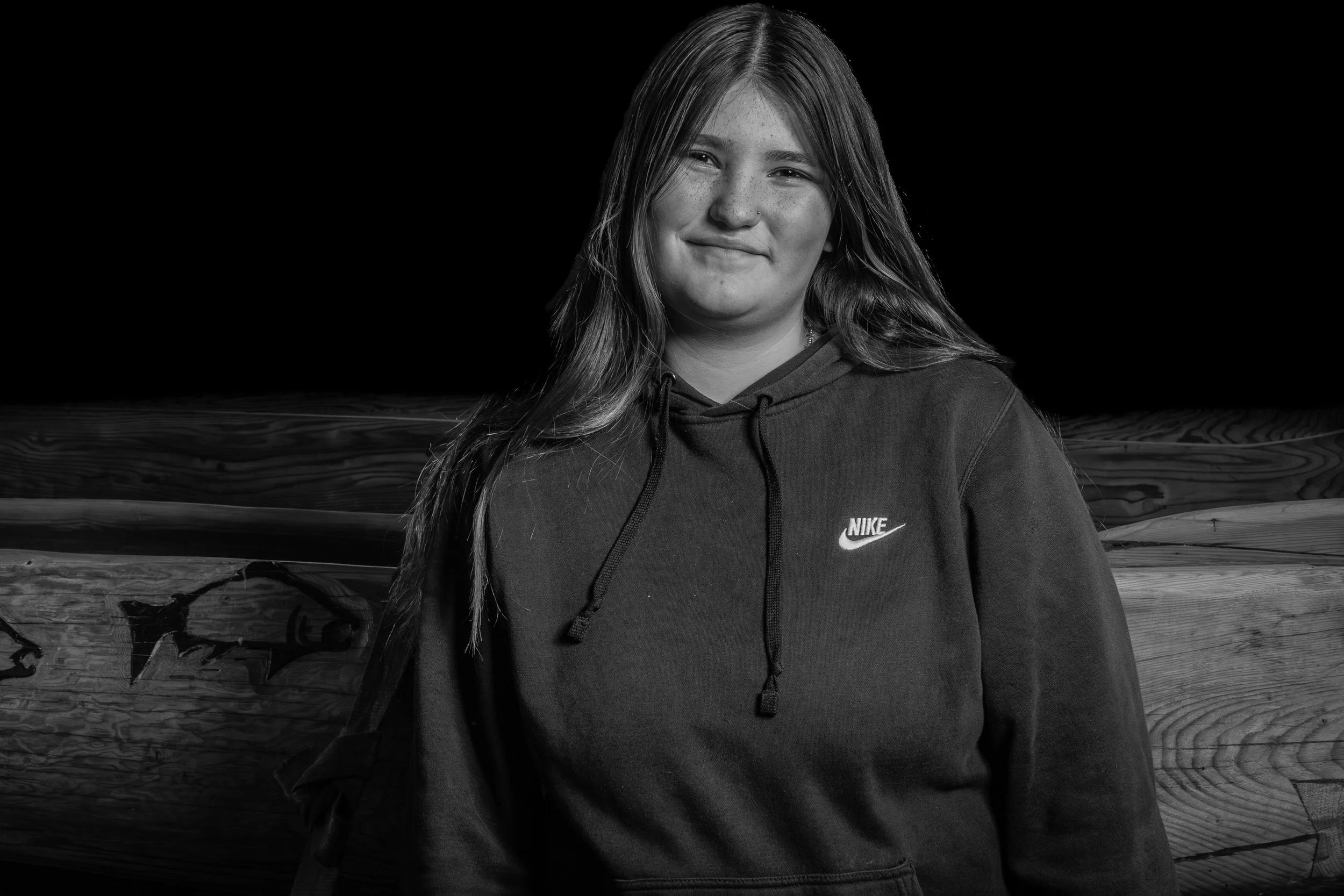
Black and white photo of a young woman with long hair, wearing a Nike hoodie, standing outdoors with wooden logs in the background.

Black and white photo of a young woman with long hair, piercings, and a cross necklace, standing outdoors near logs.

Black and white photo of a person with shoulder-length hair, wearing a T-shirt with visible text, standing outdoors with a wooden fence in the background.
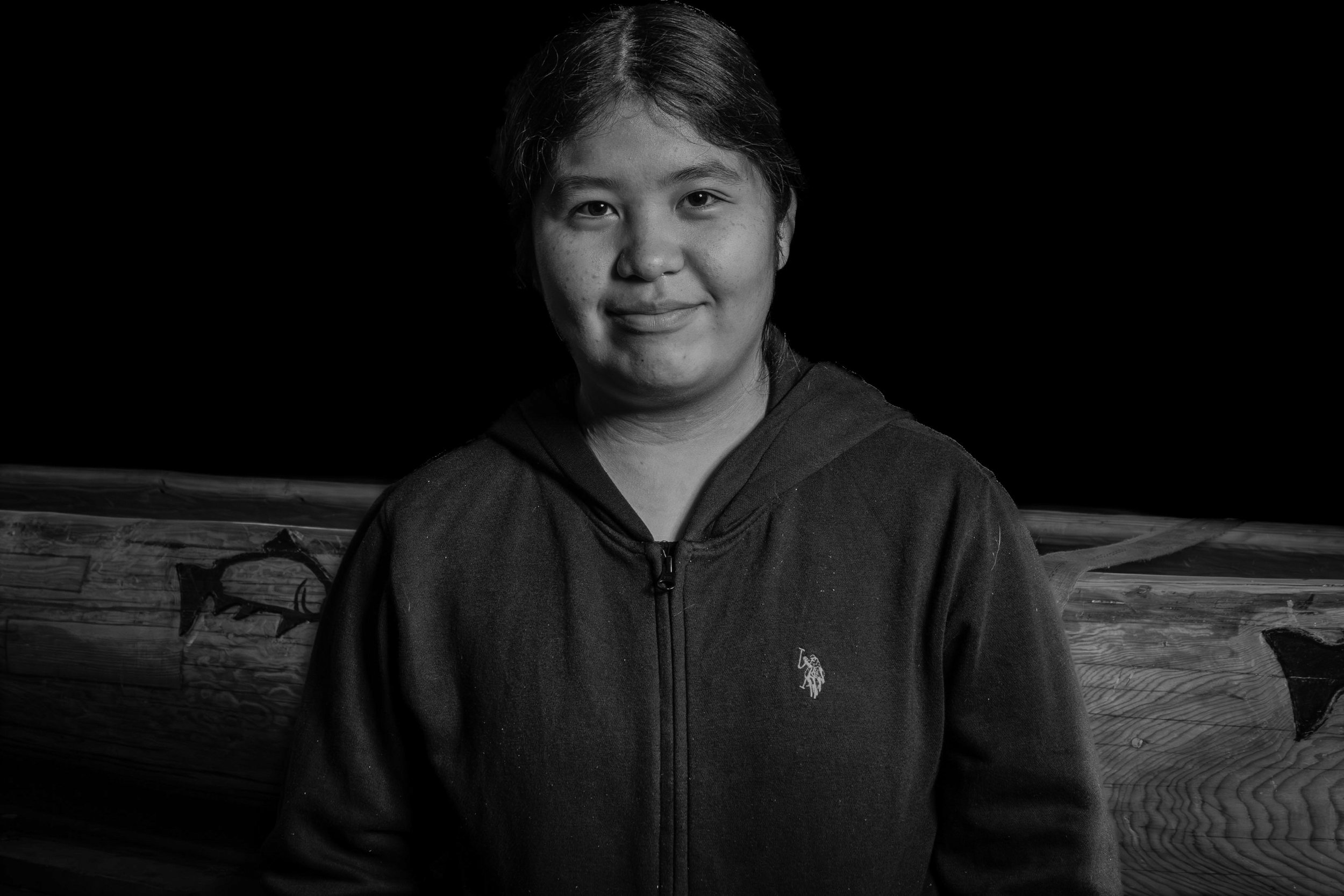
Black and white portrait of a young person with short hair, smiling, wearing a dark hoodie, standing in front of a wooden background.
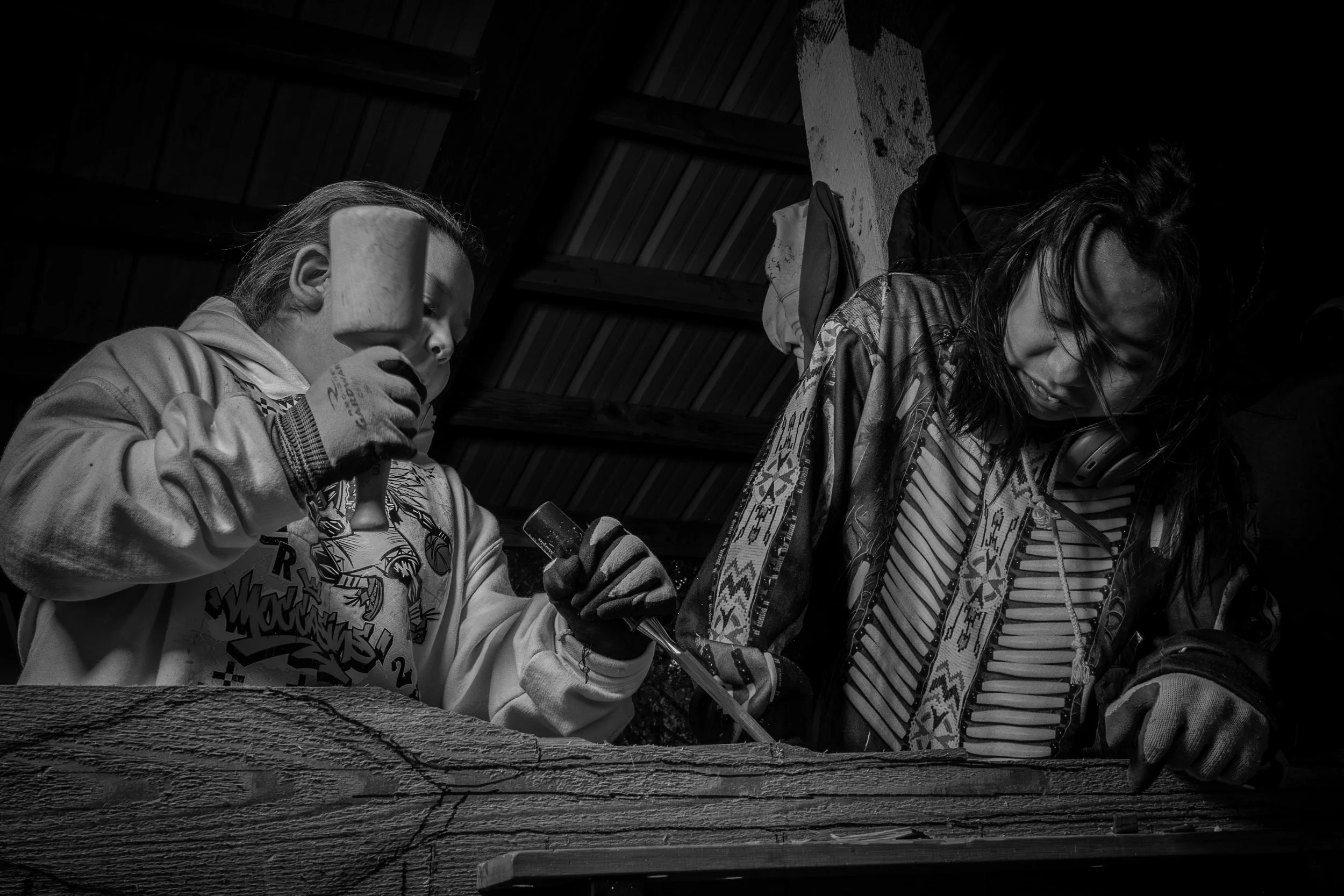
A black and white image of two people arm wrestling at a wooden table indoors, with a wooden ceiling in the background. One person has long dark hair and is wearing a striped shirt with headphones around their neck, the other person has lighter hair, is wearing a hoodie, and gloves.

A young girl with long hair, wearing a striped shirt and a jacket, is outdoors cutting a large log with a saw.

A woman wearing a patterned shirt and badge working with wood on a table outdoors, with benches and trees in the background.

Close-up of a wooden sign with carvings, placed on a bench outdoors, black and white photo.

A young boy in a jacket working on a woodworking project outdoors at night, with a person standing nearby and a workbench with tools and materials in the background.

Black and white photo of four children and an adult in a small boat on a calm body of water, with houses, trees, and a fence visible in the background

A young girl is sitting in a wooden canoe on a calm body of water, holding a paddle, and wearing a life jacket. Another child is partially visible next to her, also wearing a life jacket. The background shows rippling water.

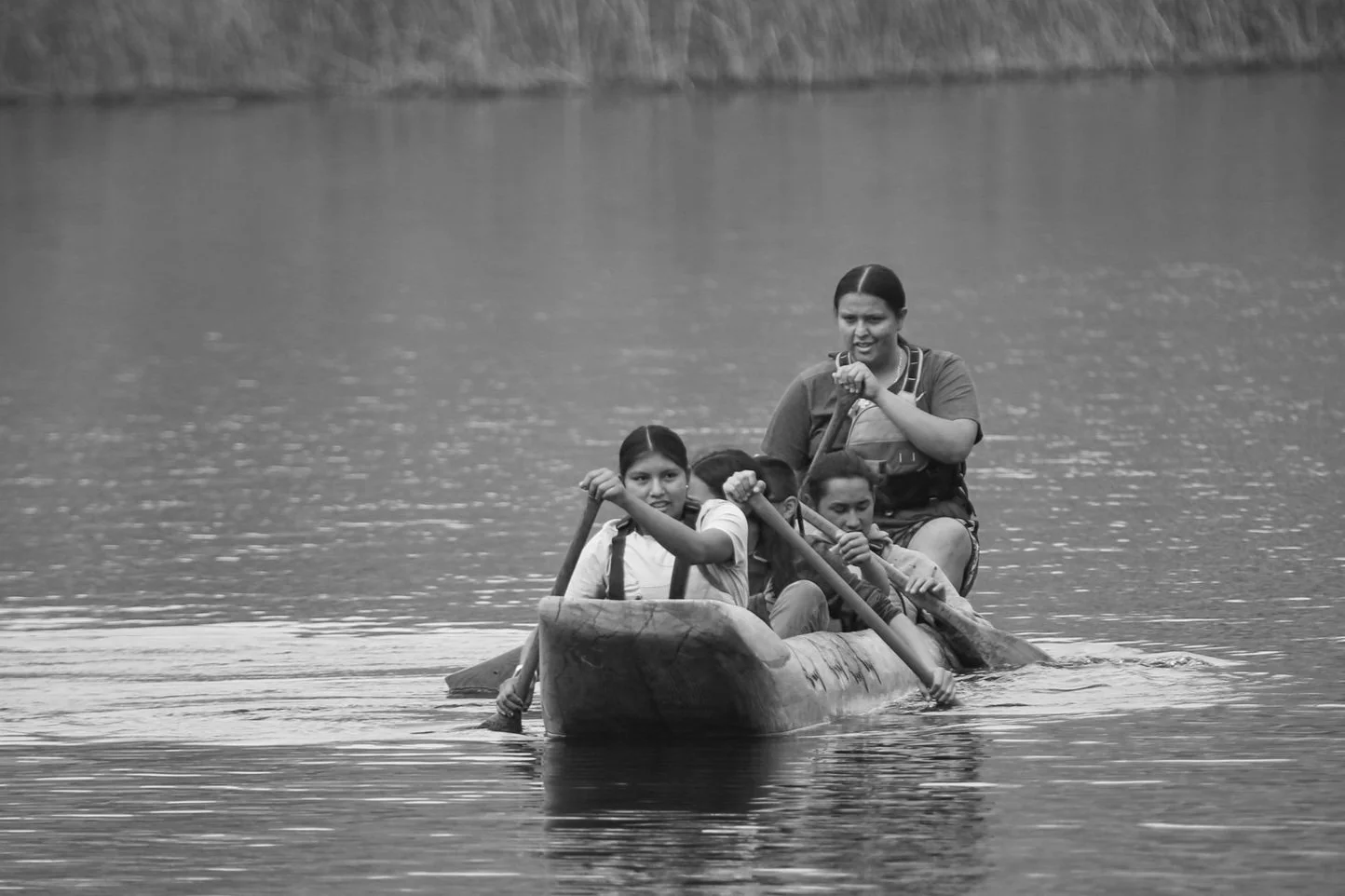
A group of four people, including children and adults, are paddling a wooden canoe on a body of water, wearing life jackets and casual outdoor clothing, with water and reflections visible in the background.

A boy in a hoodie is working with a saw on a piece of wood outdoors at night.

Young boy with short hair and earrings holding a wooden box outdoors at dusk, with trees and houses in the background.

A young boy wearing a hoodie and gloves, working on a woodworking project outdoors with a saw. There are cars and trees in the blurred background.

A young woman with shoulder-length hair, wearing a hoodie, working with tools on a piece of wood outdoors. She is focused on her work, with a background of logs and a wooden structure.

A group of people gathered outdoors in a wooded area, seated and standing, listening to a woman speaking at a table with food and supplies, during daytime.

A young boy with short dark hair, wearing a camouflage jacket, hands in gloves, is working on a woodworking project outdoors during the daytime. Several other people are in the background, some bending over, with leafless trees and parked cars visible, suggesting a winter or late autumn setting.
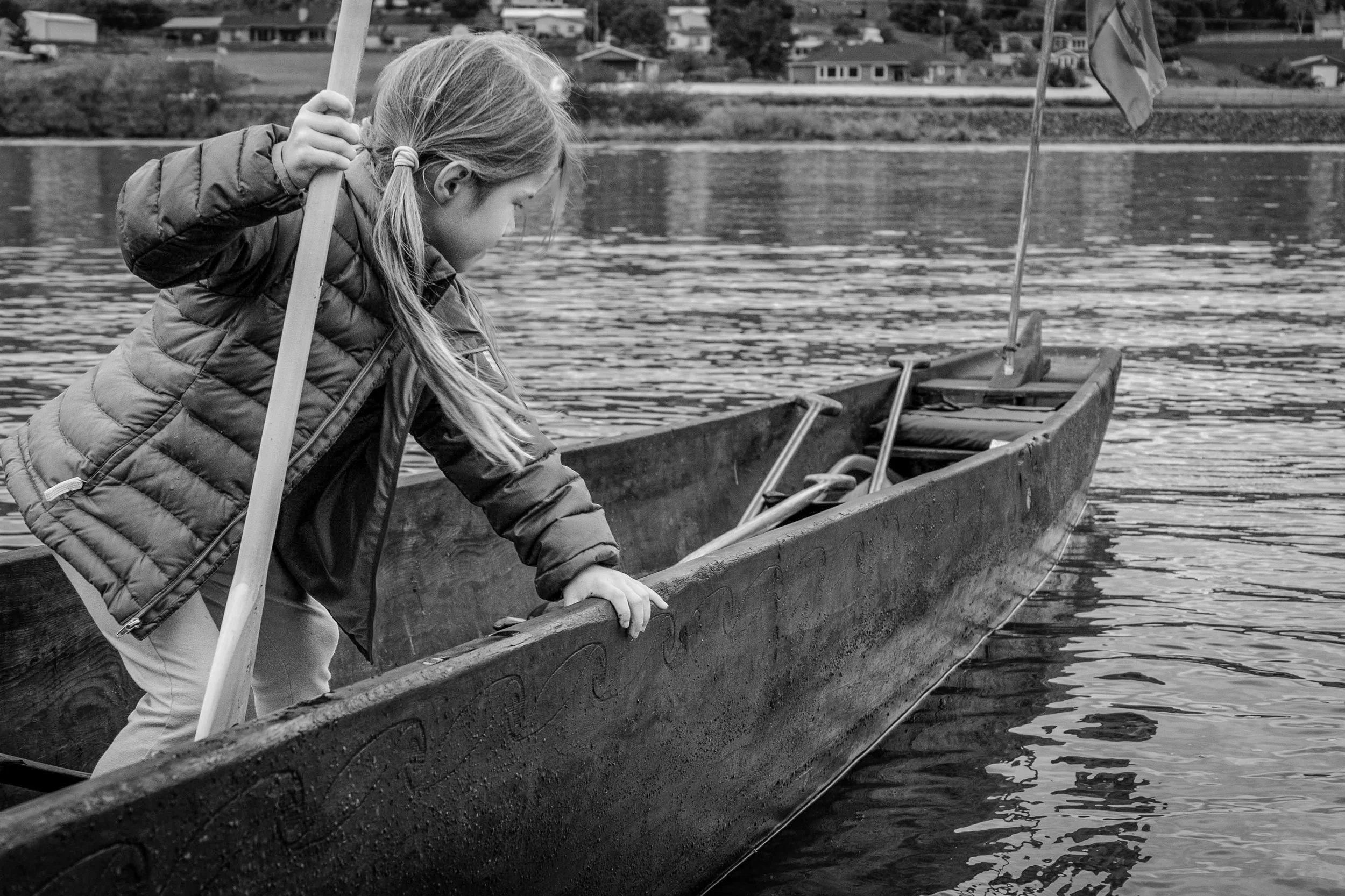
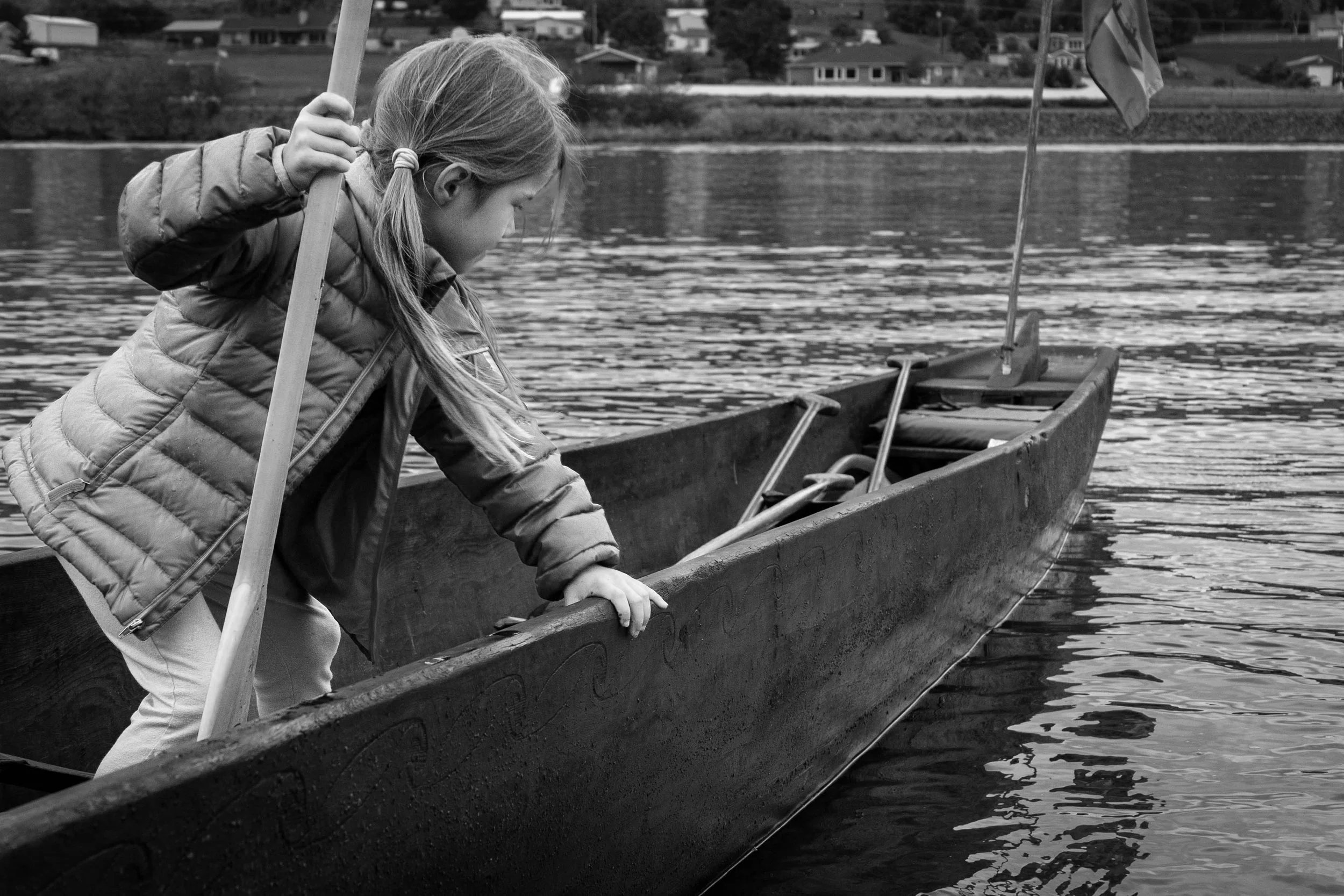
A girl with long hair tied in a ponytail, wearing a puffy jacket, is leaning over the side of a canoe on a lake, holding a wooden paddle. The water is calm with ripples, and in the background, there are houses and trees along the shoreline.

A group of people working together outdoors, focused on a large object, with a rural landscape in the background.
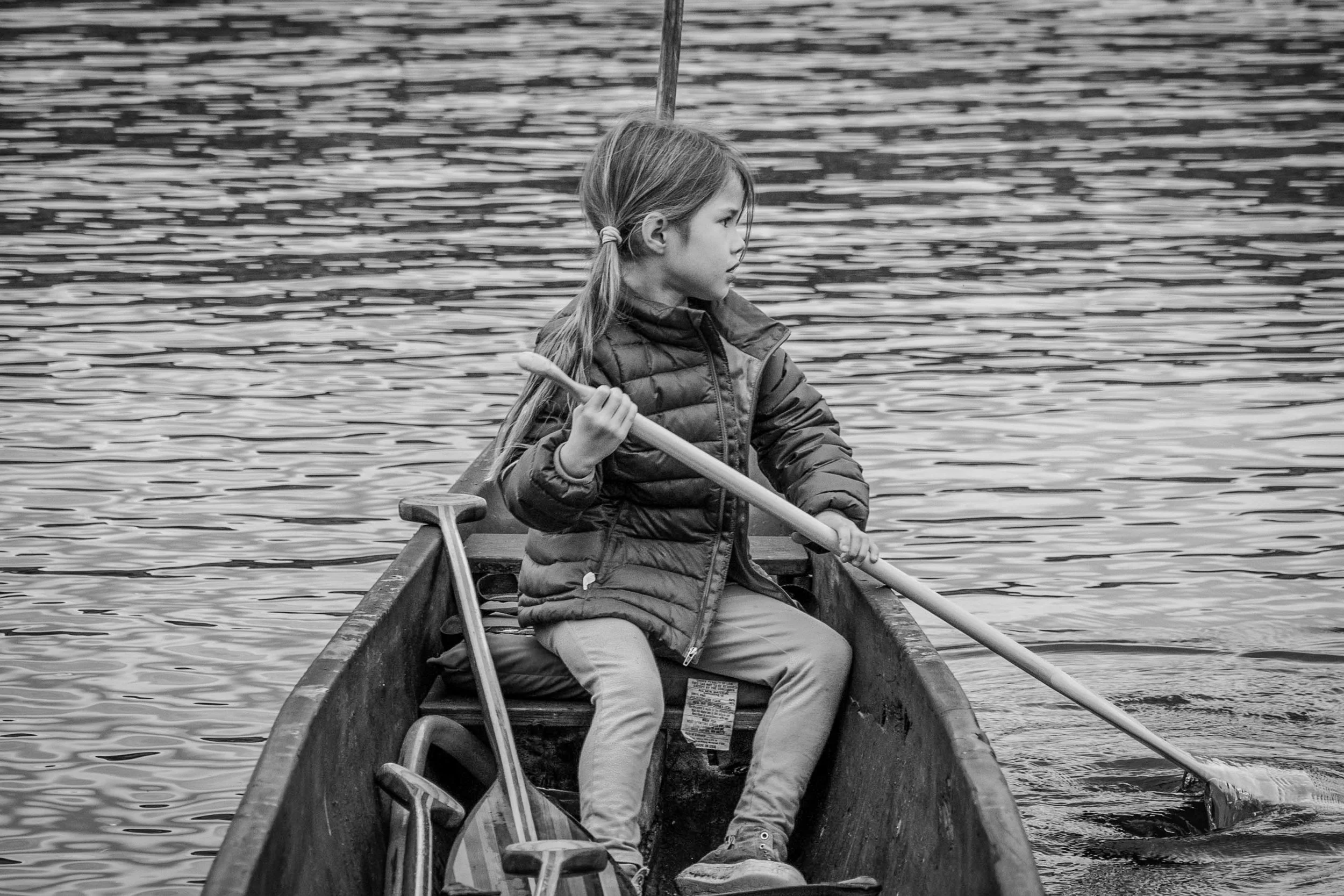
A young girl with long hair in pigtails, wearing a quilted jacket and pants, sitting in a canoe on a body of water, holding a paddle. The water has ripples and appears calm.
CANOE MEDICINE
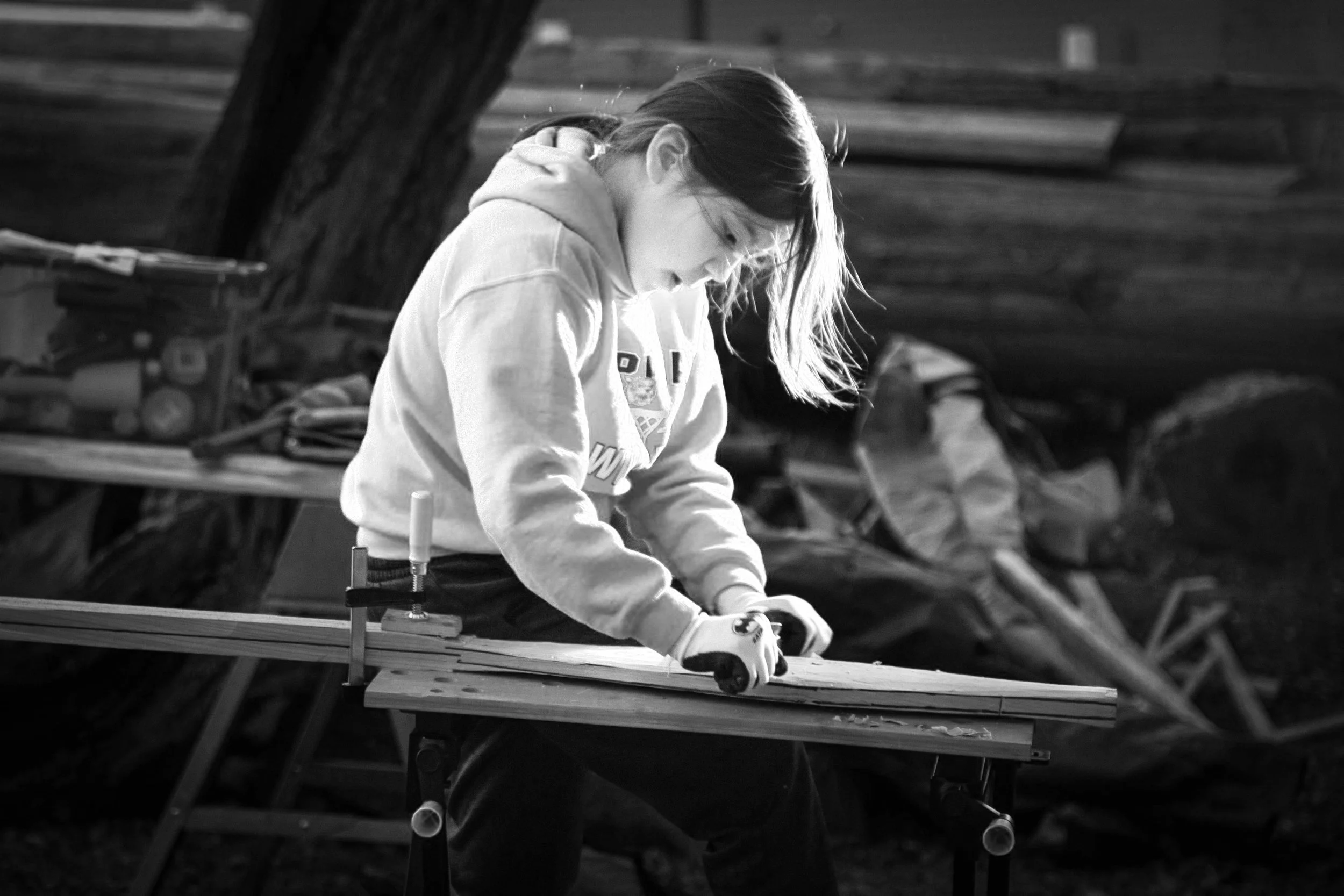
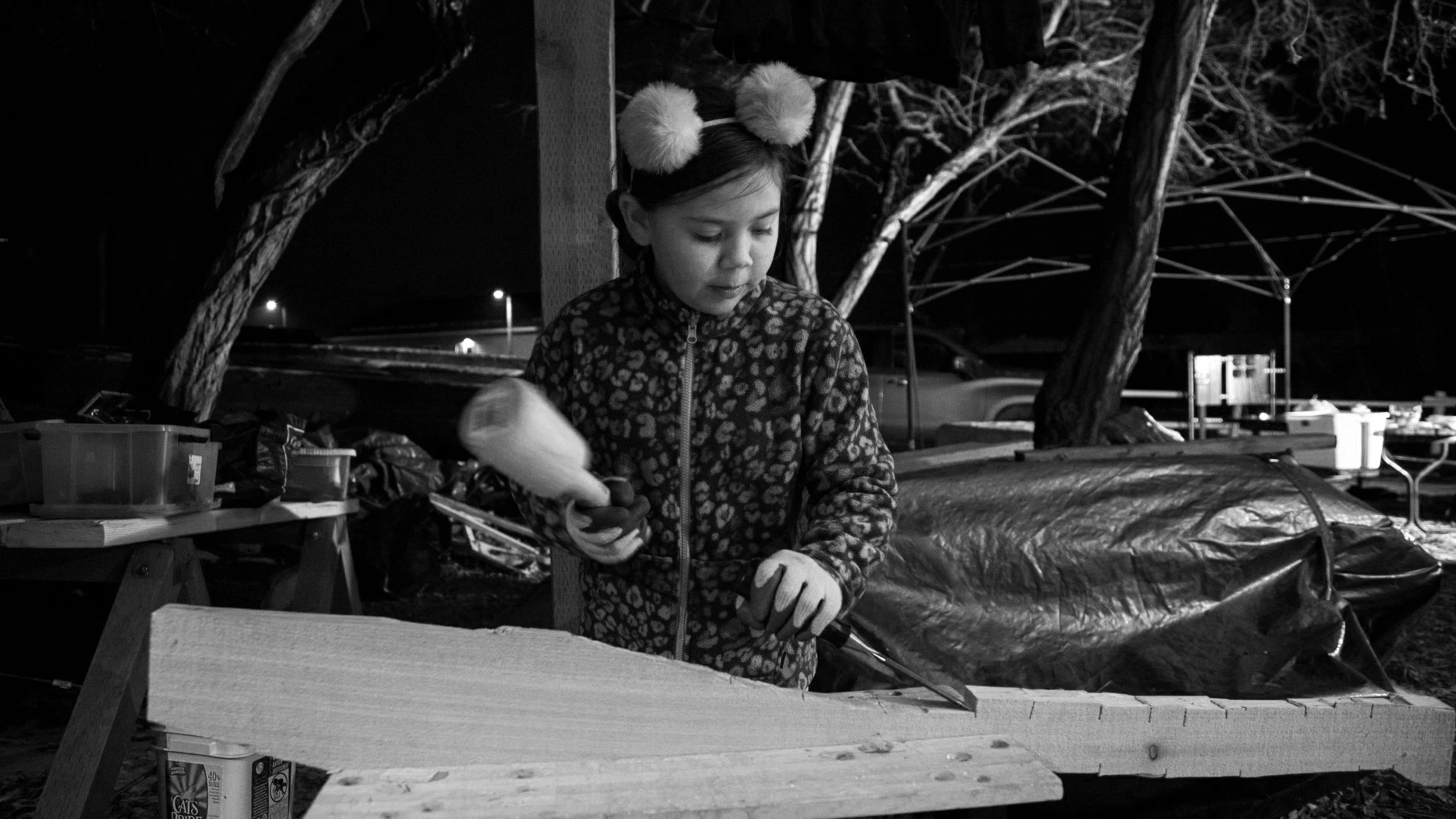
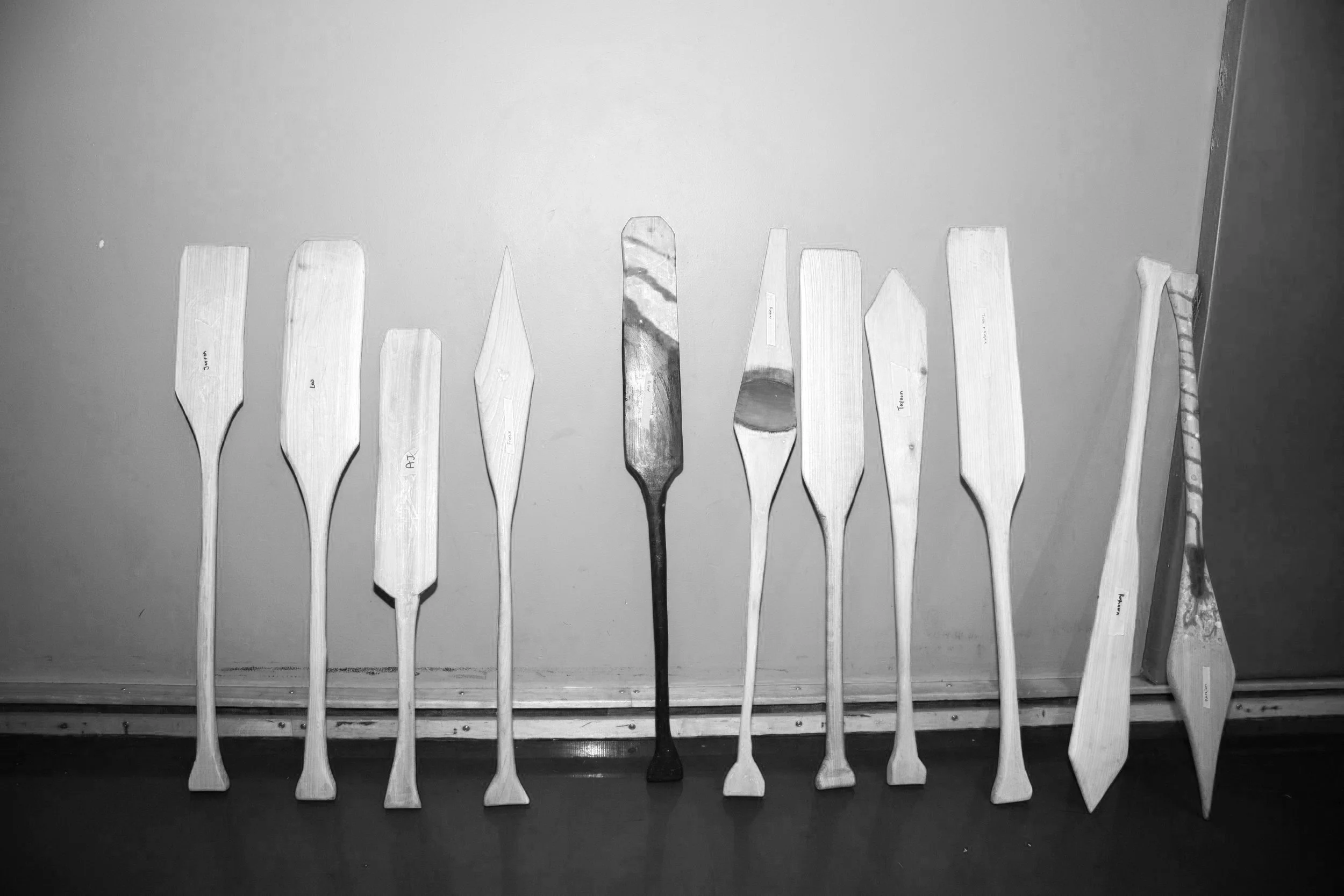
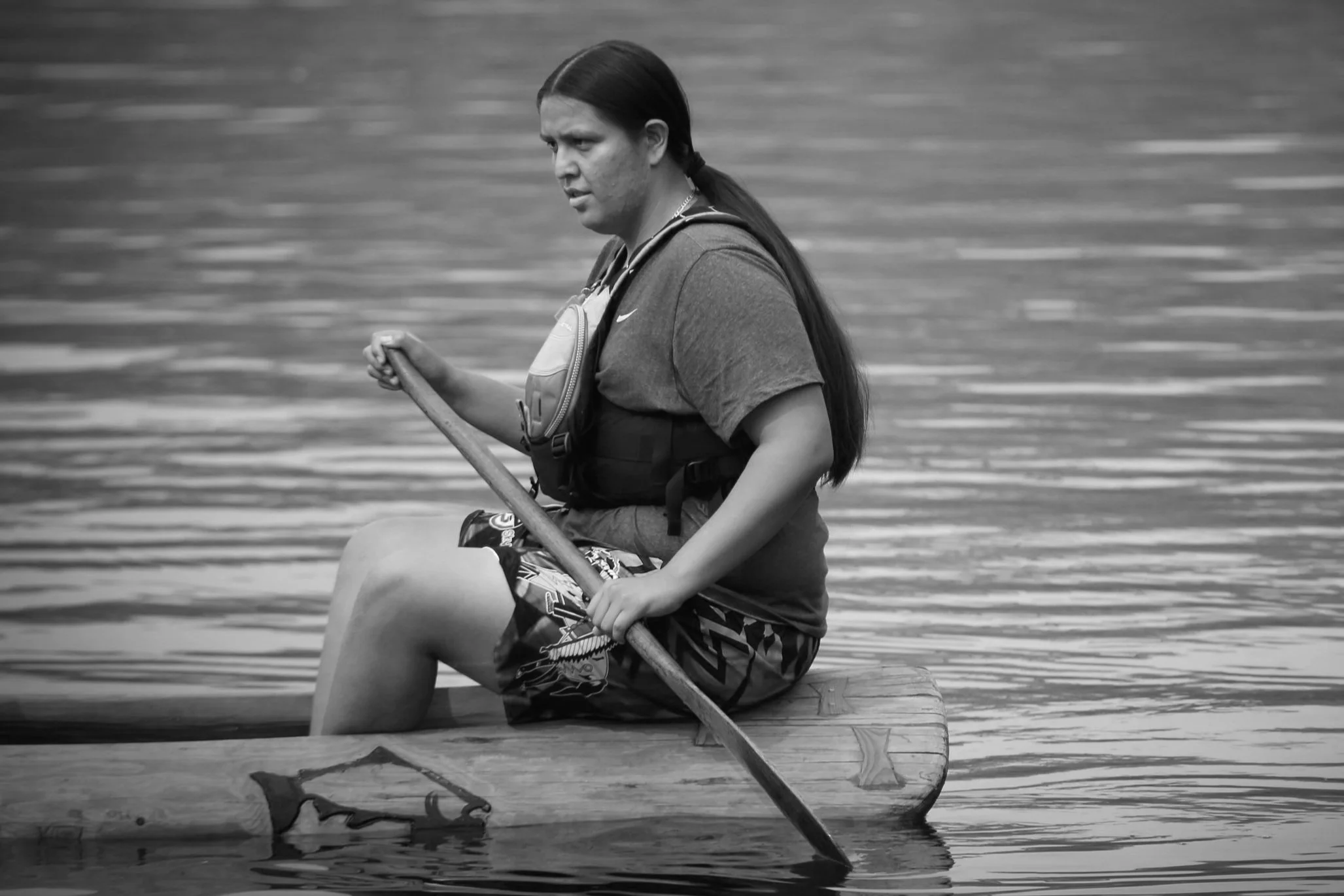
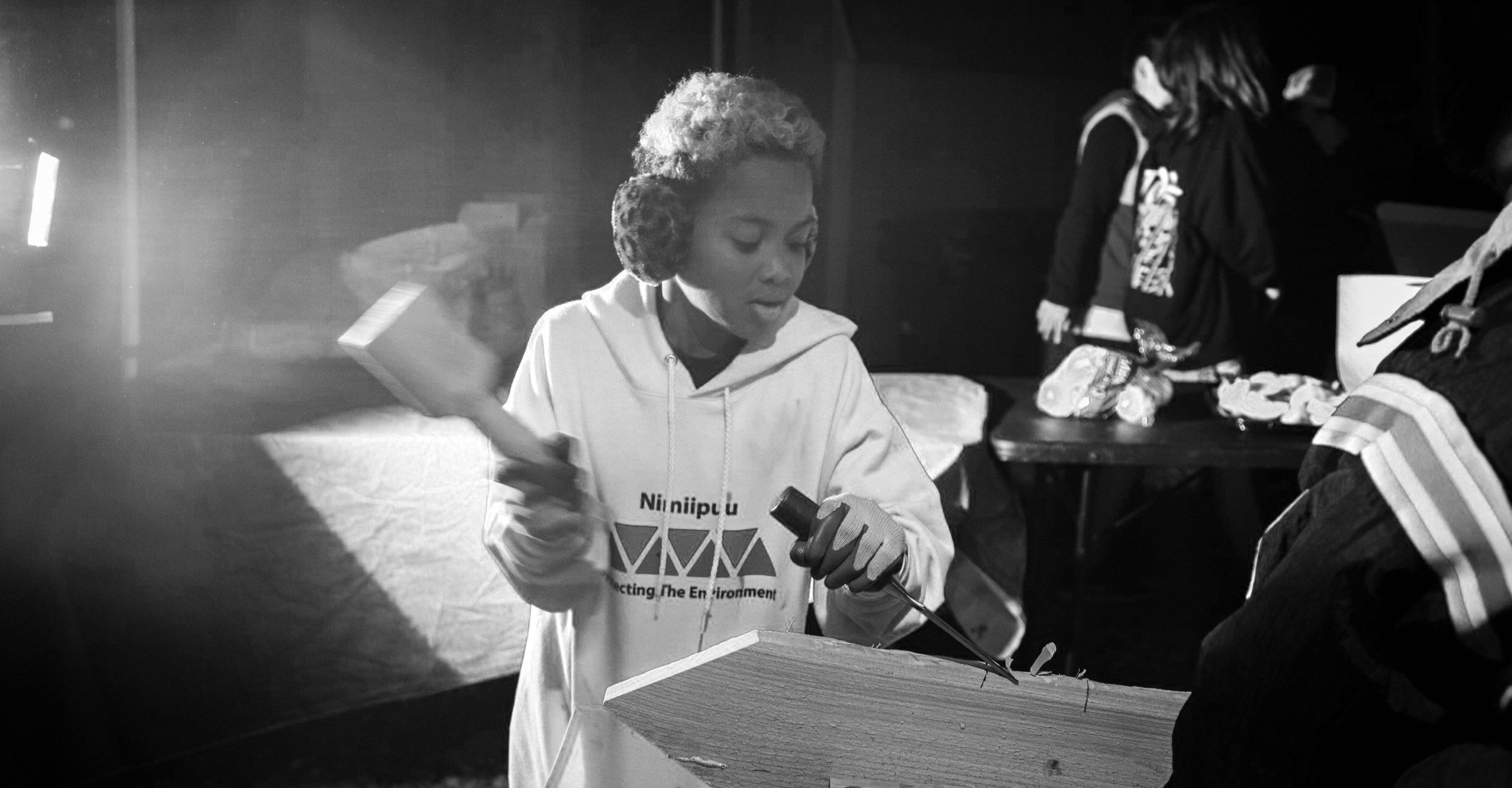
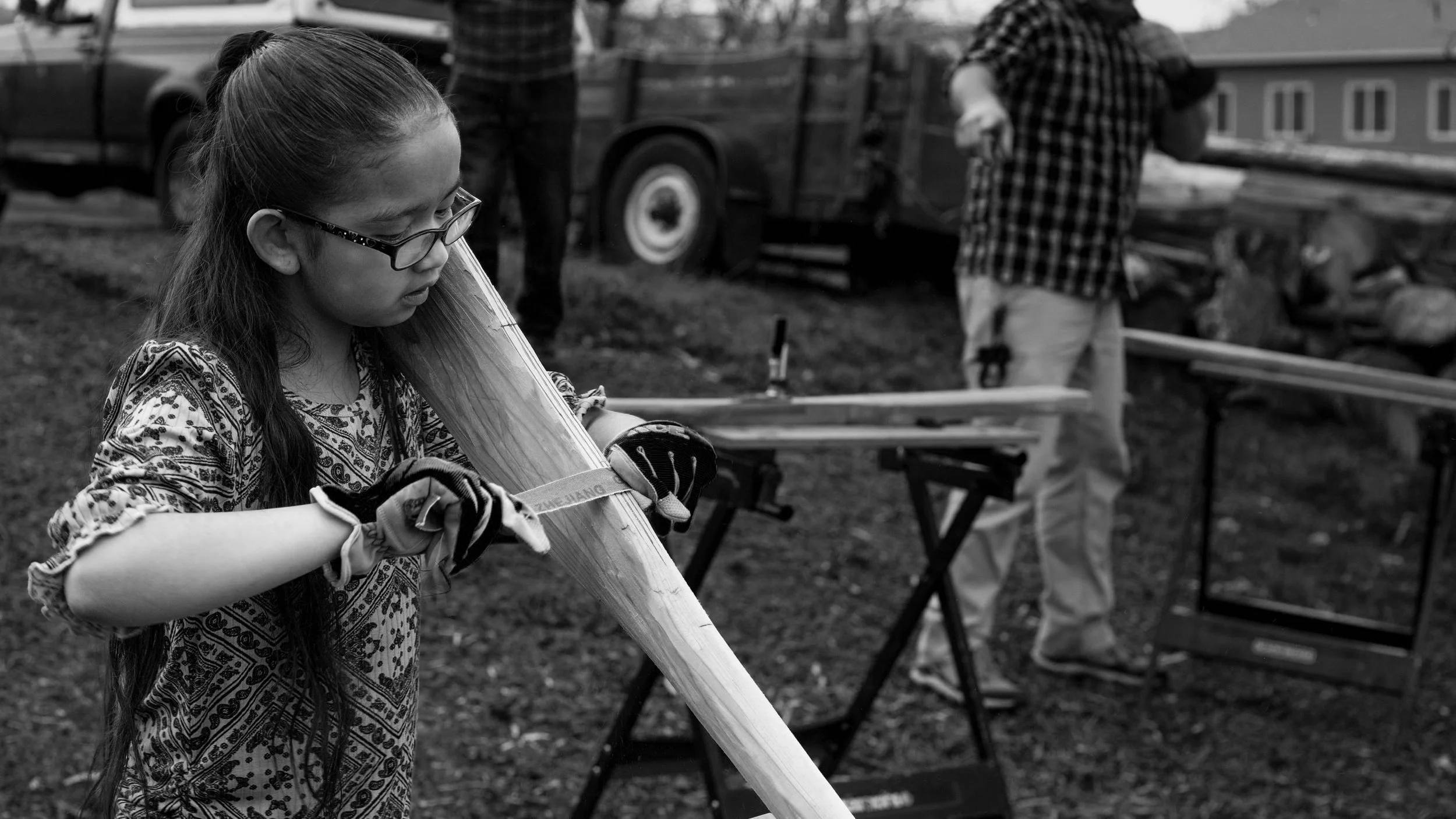
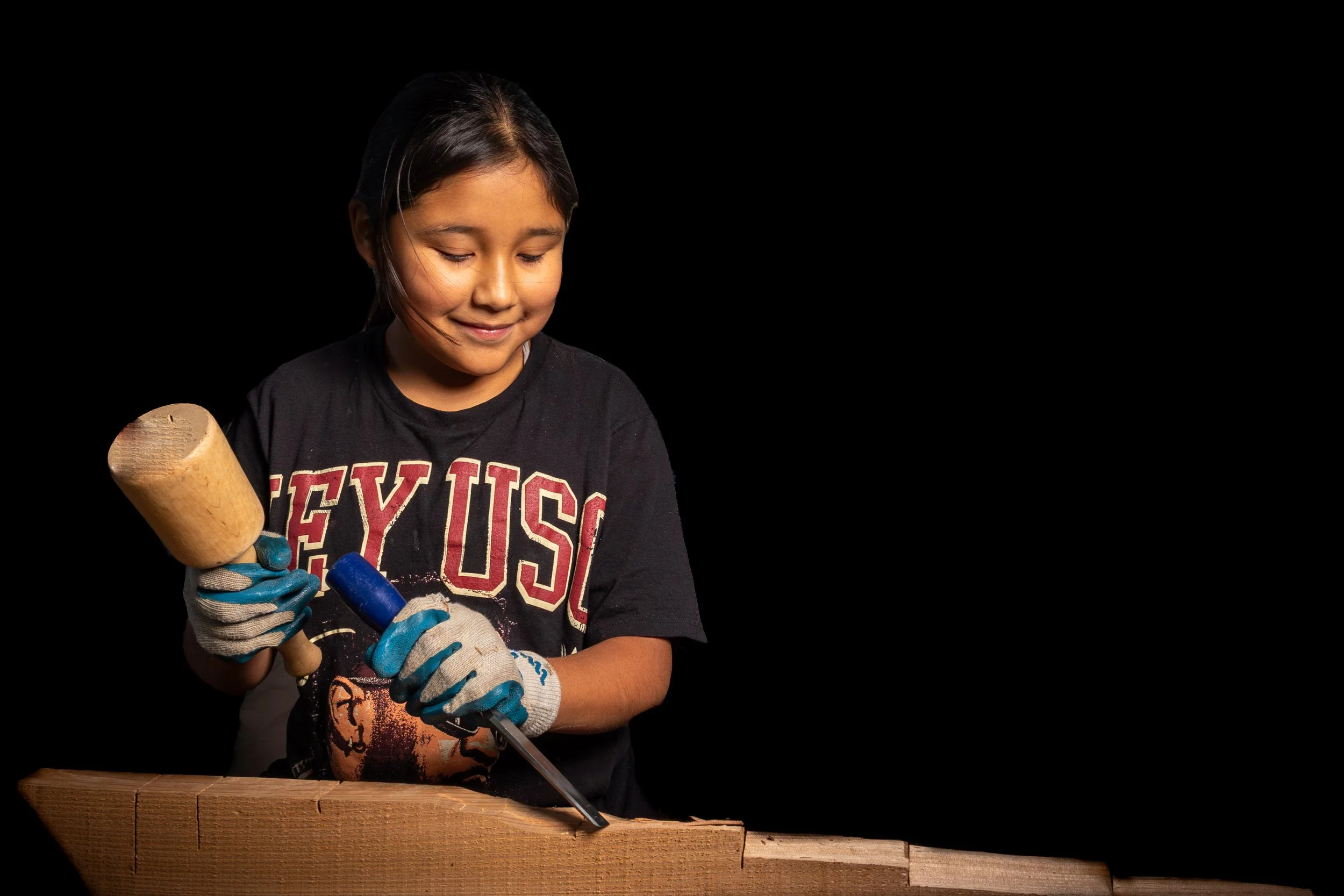
The Nimíipuu Canoe came to full fruition in an area behind the Nimiipuu Health Clinic in Lapwai, Idaho where Tribal and non‑Tribal carvers - adults and youth - worked together, literally chipping away at the log. The carvers, including youth, came every Wednesday afternoon and worked into the dark winter nights despite the cold and inclement weather. We welcomed youth and elders, family, friends, neighbors, Tribal and non-Tribal supporters. We served food, ran cultural art projects for the children and every Wednesday we carved canoe paddles so youth could learn woodworking and use the tools.
The first test launch of our canoe came on Sept 7, 2018 at the Middle Hog Island boat ramp and was paddled approximately 25 miles to Chief Timothy Park - east of Clarkston, WA where the 5th annual Free the Snake Flotilla took place. Tribal youth, elders and community members continue to paddle and learn with our traditional canoe. Canoe culture is strengthening and growing in our homelands, on our waters and with our People.